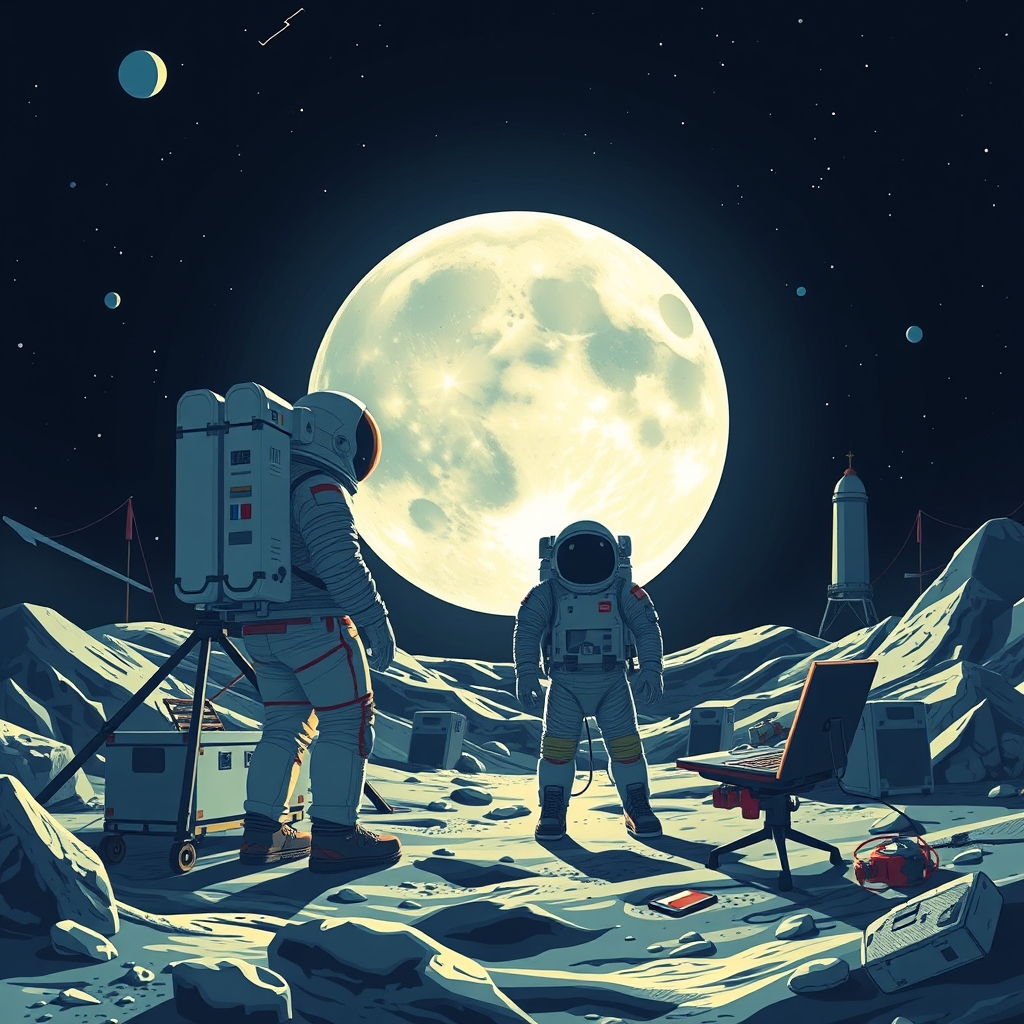
NASA Astronaut Recruitment Opens: Apply to Walk on the Moon
NASA Opens Astronaut Recruitment: The Hunt for the Next Generation of Space Explorers
For millions of people around the world, looking up at the night sky brings a familiar sense of wonder. For a select few, that wonder transforms into a lifelong career. NASA has officially opened applications for its next class of astronaut candidates, offering qualified United States citizens the extraordinary opportunity to leave Earth behind and journey into deep space.
This recruitment campaign arrives at a historic turning point for human spaceflight. We are no longer living in an era where astronauts merely visit low Earth orbit to conduct research aboard the International Space Station. While orbital research remains vital, NASA is now actively preparing to send humans back to the Moon under the Artemis campaign, build a sustained lunar presence, and eventually launch the first crewed expedition to Mars. If you have ever dreamed of wearing a spacesuit, floating in microgravity, or setting foot on an alien world, your window of opportunity has arrived.
The Artemis Era: Why NASA Needs New Astronauts Now
The space agency is undergoing one of the most ambitious expansions in its history. Over the past two decades, NASA astronauts have maintained a continuous human presence aboard the International Space Station (ISS). Working alongside international partners, crews have conducted thousands of scientific experiments, tested cutting-edge technologies, and learned how the human body adapts to extended periods in microgravity.
However, the horizon of human spaceflight is expanding rapidly. The ISS is slated for retirement in the early 2030s, making way for commercial space stations operated by private aerospace companies. At the same time, the Artemis program is gaining tremendous momentum. With the successful completion of the uncrewed Artemis I mission, NASA proved that its massive Space Launch System (SLS) rocket and Orion spacecraft can journey to the Moon and return safely.
Upcoming missions will carry humans into lunar orbit and down to the unexplored lunar South Pole, a region believed to contain vast reserves of water ice hidden within permanently shadowed craters. Establishing a permanent base camp on the Moon requires a diverse, highly trained, and adaptable corps of astronauts. These men and women will test the life support systems, rovers, power plants, and habitats necessary to prepare humanity for the ultimate leap: a three-year voyage to Mars and back.
Core Qualifications: What It Takes to Be a NASA Astronaut
Landing a spot in NASA’s astronaut corps is notoriously competitive, but the baseline qualifications are surprisingly straightforward. NASA is not looking for superhuman daredevils. Instead, the agency searches for exceptional scientists, engineers, pilots, and medical professionals who possess sound judgment, emotional resilience, and the ability to work seamlessly within a team under extreme pressure.
To be considered for the astronaut candidate program, an applicant must meet several mandatory requirements:
- United States Citizenship: Applicants must hold U.S. citizenship. Those with valid dual citizenship are also eligible to apply.
- Advanced Education in STEM: Candidates must hold a master’s degree from an accredited institution in a recognized STEM field, which includes engineering, biological science, physical science, computer science, or mathematics.
- Professional Experience: Applicants must have at least three years of progressively responsible, related professional experience earned after completing their master’s degree, or they must have logged at least 1,000 hours of pilot-in-command flight time in jet aircraft.
- Physical and Medical Fitness: Candidates must pass the rigorous NASA long-duration flight physical, which tests cardiovascular health, visual acuity, blood pressure, and physical stamina.
Alternative Educational Pathways
NASA recognizes that top-tier technical talent develops along multiple educational paths. While a traditional master’s degree in a STEM discipline is the standard requirement, the agency accepts several recognized alternatives:
- Two years of doctoral work in an eligible STEM field (toward a Ph.D.).
- A completed Doctor of Medicine (M.D.) or Doctor of Osteopathic Medicine (D.O.) degree.
- Completion of a nationally or internationally recognized test pilot school program by the designated cutoff date.
It is worth noting that certain degrees are explicitly excluded by NASA. Degrees in social sciences (such as psychology, sociology, or anthropology), aviation management, culinary arts, nursing, and business administration do not meet the core educational threshold, regardless of how accomplished an applicant might be in those fields.
Key Requirements at a Glance
The following table summarizes the essential criteria that every aspiring astronaut candidate must fulfill before submitting an application:
| Requirement Category | Minimum Specification | Accepted Alternatives |
|---|---|---|
| Citizenship | United States Citizen | Dual citizenship accepted |
| Education | Master’s Degree in STEM field | Ph.D. coursework (2 years), M.D., D.O., or Test Pilot School |
| Experience | 3 years professional STEM work | 1,000 pilot-in-command hours in high-performance jets |
| Vision | 20/20 in each eye (correctable) | PRK and LASIK surgeries permitted under specific guidelines |
| Physical Standards | NASA Long-Duration Flight Physical | Blood pressure under 140/90, fit space suit anthropometric limits |
The Essential Qualities Beyond the Resume
While technical qualifications open the door, interpersonal dynamics determine who actually walks through it. Space missions are physically confining, mentally grueling, and inherently hazardous. Astronauts spend months or even years living in cramped habitats with the same small group of colleagues, cut off from their families and familiar earthly comforts.
NASA selection panels place immense value on what they describe as “operational skills.” These include:
Communication: The ability to convey complex technical information clearly and calmly during emergencies. Astronauts must communicate effectively not just with their fellow crew members, but with flight controllers, ground scientists, and international partners.
Teamwork and Followership: In space, leadership is dynamic. An astronaut might lead a critical spacewalk in the morning and act as a support worker cleaning air filters in the afternoon. NASA looks for individuals who can lead with humility and follow with dedication.
Grace Under Pressure: Systems fail, equipment breaks, and plans change unexpectedly in space. Successful candidates must demonstrate a proven history of remaining calm, analytical, and effective when things go wrong.
Self-Care and Crew Care: Recognizing personal fatigue, managing psychological stress, and supporting the emotional well-being of crewmates is essential for long-duration missions to the Moon and Mars.
The Selection Process: Surviving the Funnel
Applying to become a NASA astronaut is an exercise in extreme patience. During recent recruitment cycles, NASA has received anywhere from 12,000 to more than 18,000 applications for a single class. From that immense pool of talent, the agency typically selects between eight and twelve individuals.
The selection journey follows a disciplined multi-stage timeline that spans more than a year.
Step 1: The Online Application via USAJOBS
All candidates must submit their application through the federal government’s USAJOBS portal. This submission includes a comprehensive federal resume, transcripts from all attended universities, professional references, and verification of flight hours or advanced certifications. The federal resume must meticulously document how the applicant meets every single qualification.
Step 2: Automated Screening and Panel Review
Human resources specialists review applications to ensure baseline eligibility. Qualified files are then passed to the Astronaut Selection Board, which consists of veteran astronauts, flight directors, and senior NASA leaders. The board scores candidates based on their technical contributions, leadership experience, operational background, and letters of recommendation.
Step 3: Preliminary Round Interviews
The top 100 to 120 applicants are invited to the Johnson Space Center in Houston, Texas, for a week of intensive preliminary interviews, basic medical assessments, and group problem-solving exercises. This stage allows the board to see how applicants interact with others and handle novel challenges.
Step 4: Finalist Evaluations
From the initial interview group, NASA narrows the field down to approximately 40 to 50 finalists. These candidates return to Houston for an exhaustive battery of medical, psychological, and physiological evaluations. Specialists examine everything from bone density and cardiac resilience to claustrophobia and emotional stability. Finalists undergo in-depth interviews with the selection board members, who make the final recommendations to NASA leadership.
Astronaut Candidate Training: The Two-Year Crucible
Receiving the congratulatory phone call from the Chief of the Astronaut Office is a life-changing milestone, but it does not make someone an astronaut yet. Successful applicants are classified as “Astronaut Candidates,” or ASCANs. Before they can ever be assigned to a flight crew, they must complete an intense, two-year basic training curriculum designed to build foundational spaceflight skills.
1. Spacewalking at the Neutral Buoyancy Laboratory
Spacewalks, known formally as Extravehicular Activities (EVAs), are among the most dangerous and physically exhausting tasks an astronaut can perform. Candidates train at the Neutral Buoyancy Laboratory (NBL) in Houston, a massive indoor pool holding 6.2 million gallons of water. Submerged inside full-scale mockups of the International Space Station and Artemis lunar hardware, candidates wear weighted spacesuits that simulate the weightlessness of orbit. For every single hour an astronaut spends working in real space, they spend up to seven hours training underwater.
2. High-Performance Aviation
Non-pilot candidates are paired with experienced military or civilian pilots to train in NASA’s fleet of T-38 Talon supersonic twin-jet aircraft. Operating a high-speed jet requires rapid situational awareness, quick mental math, and precise decision-making in a dynamic environment where mistakes carry real consequences. It serves as an ideal analog for spaceflight operations.
3. Robotics and Systems Engineering
Candidates must master the complex systems of modern spacecraft, including life support, electrical grids, propulsion, and navigation. They also learn to operate massive robotic arms, such as Canadarm2 on the ISS, which are used to capture incoming cargo vehicles, move heavy equipment, and position astronauts during spacewalks.
4. Language and Cultural Fluency
Because space exploration is a global enterprise, candidates must develop strong foreign language capabilities. While English is the operational standard on the ISS, Russian language proficiency has long been a requirement for training at Star City near Moscow and flying aboard Soyuz spacecraft. As international partnerships expand under the Artemis Accords, multi-cultural collaboration is more important than ever.
5. Wilderness Survival and Geology
Astronauts must be prepared for emergency landings in remote regions, from frozen wilderness to open oceans. Survival training tests resilience, self-reliance, and group dynamics in adverse conditions. Furthermore, because Artemis astronauts will be exploring the lunar surface, extensive geology field training is conducted in rugged volcanic and desert landscapes across the globe, teaching candidates how to identify and collect valuable scientific samples.
The Fleet: What Spacecraft Will New Recruits Fly?
The current era of human spaceflight features the most diverse fleet of operational and developmental spacecraft in history. Unlike previous generations who were limited to either the Space Shuttle or the Russian Soyuz, new astronauts will train across a broad spectrum of commercial and government-owned vehicles.
The Orion Spacecraft
Built by Lockheed Martin for NASA, Orion is the flagship exploration vehicle for deep space. Designed to carry four astronauts beyond low Earth orbit, Orion is built to endure the extreme radiation of deep space and the blistering thermal conditions of re-entering Earth’s atmosphere at lunar return velocities, exceeding 25,000 miles per hour.
Commercial Crew Vehicles
For low Earth orbit operations, NASA relies on domestic commercial partners. SpaceX’s Crew Dragon has become a reliable workhorse, ferrying crews to and from the space station since 2020. Boeing’s CST-100 Starliner provides a second American pathway to orbit. Astronauts assigned to orbital missions train extensively on these automated, touchscreen-driven modern vehicles.
Human Landing Systems (HLS)
To reach the surface of the Moon from lunar orbit, NASA has contracted commercial partners to develop Human Landing Systems. SpaceX is modifying its massive Starship vehicle to serve as the lunar lander for the Artemis III and IV missions. Blue Origin is developing the Blue Moon lander for subsequent expeditions. Training to pilot and live inside these colossal lunar landing vehicles represents completely unmapped territory for modern astronauts.
Compensation and Career Realities
Many people wonder how much an astronaut actually earns. Because astronauts are federal civil servants, their compensation is governed by the United States government’s General Schedule (GS) pay scale. Astronaut candidates typically enter the federal system at the GS-13, GS-14, or GS-15 pay grade, depending on their academic credentials and previous professional experience.
In addition to standard federal salary steps, pay is adjusted for local cost of living in the Houston metropolitan area. A newly hired astronaut can expect an annual starting salary ranging between roughly $150,000 and $180,000. Military service members selected for the program remain on active duty and retain their military rank, basic pay, housing allowance, and military benefits throughout their NASA tenure.
While the financial rewards are respectable, no one becomes an astronaut for the paycheck. The career involves significant sacrifices, including extensive travel, frequent separations from family, and long periods between spaceflight assignments. When astronauts are not training for their own missions, they perform crucial ground-support duties. They serve as Capsule Communicators (CapCom) in Mission Control, test hardware in development, evaluate new spacesuits, and work with international space agencies to ensure mission success.
Advice for Prospective Applicants
If you intend to apply for NASA’s astronaut candidate program, either during this current cycle or in the future, consider the following practical insights from former selection board members and veteran astronauts:
Pursue What You Genuinely Love
Do not select a college major, change your career path, or take up hobbies simply because you think they will look impressive on a NASA application. Selection boards easily identify applicants who check boxes superficially. Instead, pursue a field of study that genuinely fascinates you. If you are passionate about your work, you will excel at it, earn advanced degrees, publish impactful research, or achieve leadership roles. If you never get selected, you will still have a deeply fulfilling career that you love.
Develop Operational Skills
Technical brilliance alone is insufficient. Build skills that place you in challenging environments where decisions carry direct consequences. Learn to fly airplanes, earn SCUBA diving certifications, join search-and-rescue teams, or participate in scientific expeditions to remote field stations. These experiences teach situational awareness, operational discipline, and crisis management.
Prioritize Fitness and Longevity
Spaceflight takes a harsh physical toll on the human skeleton, cardiovascular system, and muscles. A consistent fitness routine focusing on cardiovascular stamina, core strength, and mobility will help you pass NASA’s stringent medical physical. Protect your hearing and vision, manage blood pressure through healthy dietary habits, and treat physical health as a foundational professional asset.
Master the Federal Resume Format
One of the most frequent reasons highly qualified professionals are eliminated early in the process is submitting a standard private-sector resume. Private-sector resumes are often brief summaries, while a federal resume requires exhaustive detail. You must explicitly describe your duties, responsibilities, leadership roles, software proficiencies, publications, and hours worked per week. If you fail to demonstrate clearly that you meet every prerequisite, automated systems will reject your file before a human ever sees it.
A Defining Moment for Humanity
Human space exploration is standing on the threshold of an unprecedented golden age. Private companies are developing low-cost launch systems, space tourism is taking its first tentative steps, and automated scientific rovers are unlocking the chemical secrets of Mars and the outer moons of the solar system.
Yet nothing captures the human imagination quite like sending our fellow human beings out into the dark, silent expanse of space. Astronauts are ambassadors of our curiosity, our courage, and our collective technical capability. The men and women chosen during this recruitment drive will stand on the shoulders of the Mercury, Gemini, Apollo, and Shuttle pioneers. They will look back at Earth from a distance of 240,000 miles, walk across untouched lunar plains, and lay the vital groundwork for humanity’s eventual journey to the Red Planet.
The application portal is open. If you have the qualifications, the dedication, and the dream of pushing the frontier of human experience, now is the time to make your mark on history.



news via inbox
Nulla turp dis cursus. Integer liberos euismod pretium faucibua