Nintendo Switch Deals Drop Ahead of Black Friday as Switch 2 Looms
Nintendo hardware deals are notoriously hard to find. Unlike other console makers who regularly slash prices throughout the calendar year, Nintendo treats price cuts like rare collector items. When a legitimate discount shows up on the Nintendo Switch family of systems weeks before the holiday rush, gamers pay attention. Retailers have quietly rolled out early promotional pricing on Nintendo hardware, catching shoppers off guard well ahead of Black Friday.
This early discount cycle arrives at a fascinating moment for the gaming industry. Nintendo has already confirmed that an announcement regarding the successor to the Nintendo Switch, unofficially dubbed the Nintendo Switch 2, will take place within this fiscal year. As a result, savvy shoppers find themselves standing at a crossroads. Should you jump on an uncharacteristically early price cut right now, or should you save your hard-earned cash for the next generation hardware just around the corner?
At TechRook, we closely monitor retail cycles, hardware supply chains, and market pricing to help you spend your tech budget wisely. In this deep dive, we break down everything behind these rare pre-holiday discounts, examine what is coming with the Nintendo Switch 2, and provide clear advice on whether you should buy a console today or wait for the next generation.
The Anatomy of a Rare Nintendo Deal
If you have followed video game hardware trends over the past seven years, you know that the Nintendo Switch family rarely experiences direct price cuts on brand-new hardware. Usually, holiday promotions are limited to standard retail bundles. Historically, Nintendo repackages the base console at its original retail price and tosses in a digital code for a game like Mario Kart 8 Deluxe alongside a three-month Nintendo Switch Online membership.
Direct cash discounts on the console itself, particularly outside the official Black Friday sales week, are remarkably uncommon. Seeing major storefronts, authorized sellers, and retail giants drop prices below the standard Manufacturer Suggested Retail Price (MSRP) is a welcome surprise for shoppers looking to secure holiday gifts early.
Several market dynamics explain why these discounts are surfacing right now:
- Clearing Channel Inventory: With over 143 million units sold globally since its launch in March 2017, the Nintendo Switch is nearing the end of its active lifecycle. Retailers want to keep inventory moving quickly to avoid holding excess stock when the successor is formally showcased.
- Spreading Out the Holiday Rush: Shipping logistics, warehouse capacity, and digital storefront traffic are easier to manage when holiday spending begins in October instead of late November. Retailers use early doorbusters on marquee electronics to lock in consumer dollars early.
- Competitive Pressure: Rival handheld gaming devices such as the Steam Deck, ASUS ROG Ally, and Lenovo Legion Go have reshaped the portable gaming scene. While these handheld gaming PCs cater to a slightly different market, their presence pushes retailers to discount traditional consoles to capture budget-minded gamers.
Why Nintendo Hardware Maintains Its Value
To appreciate how rare this early promotion is, you have to understand Nintendo’s broader business philosophy. Sony and Microsoft often treat their entry-level console hardware as loss leaders. They sell the hardware at thin margins, or sometimes at a modest loss, banking on subscription services, online storefront purchases, and microtransactions to generate profits over time.
Nintendo takes the opposite approach. Ever since the launch of the original Famicom and Game Boy, the Japanese gaming titan has insisted on selling hardware for a profit from day one. In addition, classic first-party Nintendo titles such as The Legend of Zelda: Breath of the Wild, Super Mario Odyssey, and Super Smash Bros. Ultimate routinely command their original retail prices years after hitting store shelves.
Because first-party software rarely sees deep markdowns, console discounts become the primary way for new adopters to save money. When an early holiday discount surfaces, it tends to sell out quickly because consumers understand that waiting for a better deal during Cyber Week rarely pays off with Nintendo systems.
Current Switch Hardware Lineup: Which Model Is Discounted?
Before deciding to purchase, it is essential to know which specific hardware revision fits your lifestyle. The current Nintendo Switch hardware family consists of three distinct models:
1. Nintendo Switch OLED Model
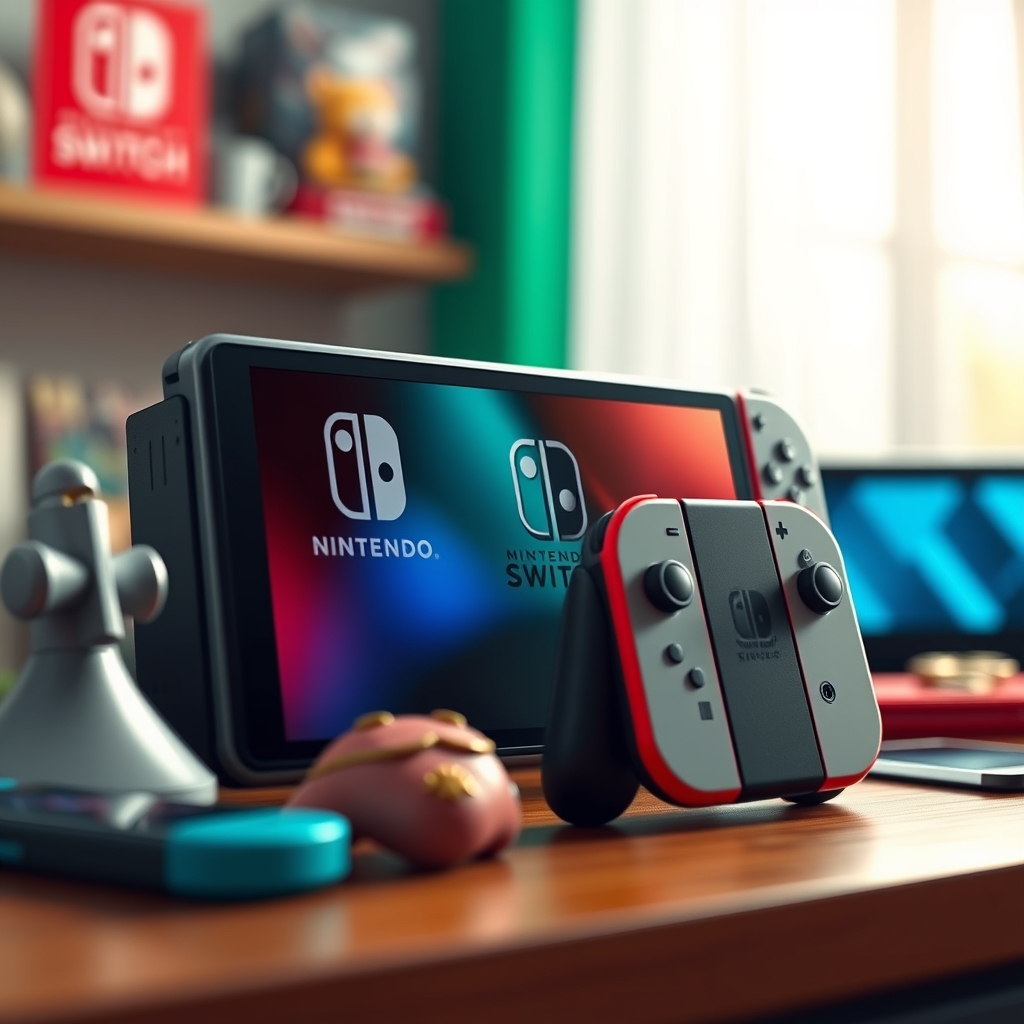
The OLED model represents the pinnacle of the current Switch generation. It features a gorgeous 7-inch vibrant OLED display, slim bezels, a wide adjustable tabletop stand, enhanced onboard audio speakers, 64GB of internal storage, and a redesigned dock with a built-in wired LAN port. If you play your console in handheld or tabletop mode often, this is by far the best version of the system. Most of the standout early promotions focus on this premium tier.
2. Standard Nintendo Switch (Base Model)
The standard model features a 6.2-inch LCD screen, 32GB of internal storage, and the standard dock without an integrated Ethernet port. While it plays the exact same library of games as the OLED model, the screen display feels noticeably dated due to wider bezels and lower contrast levels. Standard models occasionally show up in promotional bundles, but the OLED model typically delivers better long-term value for a modest price difference.
3. Nintendo Switch Lite
Designed purely for portability, the Switch Lite drops the dock, eliminates detachable Joy-Con controllers, and shrinks the screen down to 5.5 inches. It is lightweight, durable, and highly affordable, making it a favorite for younger children and frequent commuters. However, it cannot connect to your television under any circumstances, which limits its flexibility as a shared living room console.
What We Know About the Nintendo Switch 2
The biggest question hanging over any Switch purchase today is the impending arrival of the next generation platform. Rumors, supply-chain leaks, and official statements from Nintendo leadership have given us a clear picture of what the successor will offer.
Nintendo President Shuntaro Furukawa officially confirmed that the company will make an announcement about the successor to the Nintendo Switch within the fiscal year ending March 31, 2025. While Nintendo has kept full hardware specifications under wraps, extensive reporting from industry analysts and component suppliers reveals exciting technical upgrades.
Custom NVIDIA Silicon and Modern Architecture
The current Switch runs on an aging NVIDIA Tegra X1 processor, a mobile chip originally designed in 2015. In contrast, the Switch 2 is widely expected to utilize a custom NVIDIA chip, internally referred to as the T239. This modern processor will bring a massive leap in processing power, memory bandwidth, and energy efficiency.
NVIDIA DLSS and Ray Tracing Support
Perhaps the most transformative feature expected on the Switch 2 is Deep Learning Super Sampling (DLSS). DLSS is an artificial intelligence upscaling technology developed by NVIDIA. It allows games to render at a lower internal resolution, such as 720p or 1080p, and then intelligently reconstruct the image to sharp 4K resolution on an external television display. This technology enables visually demanding games to run smoothly without draining excessive battery life or generating extreme heat inside a portable chassis.
More RAM and Faster Storage
Modern gaming demands fast memory and quick storage drives. The current Switch provides only 4GB of unified system RAM and slow eMMC flash storage, which creates lengthy loading times in massive open-world titles. Industry leaks indicate that the Switch 2 could feature 12GB of high-speed LPDDR5X RAM and modern UFS 3.1 storage. This shift will dramatically reduce load times and allow third-party developers to bring modern multi-platform games to the portable format.
Display Choices: LCD First, OLED Later?
Interestingly, supply chain reports suggest that Nintendo may launch the Switch 2 with an 8-inch LCD screen rather than an OLED panel to keep launch costs manageable for consumers. If true, picking up a discounted Switch OLED today might actually give you a superior screen experience for handheld play compared to an early-run Switch 2, even though the Switch 2 will feature significantly more graphical horsepower.
Hardware Comparison: Current Switch OLED vs Expected Switch 2
To help you compare the two generations side by side, we have compiled an overview based on confirmed Switch OLED specifications and verified supply-chain data regarding the upcoming successor.
| Hardware Feature | Nintendo Switch OLED | Nintendo Switch 2 (Projected) |
|---|---|---|
| Display Type | 7.0-inch OLED Display | 8.0-inch LCD Panel (Initial Model) |
| Resolution (Handheld) | 720p Native | 1080p Native (Expected) |
| Resolution (Docked) | Up to 1080p via HDMI | Up to 4K via NVIDIA DLSS |
| Processor | NVIDIA Custom Tegra X1 | Custom NVIDIA Tegra T239 |
| System Memory (RAM) | 4GB LPDDR4 | 10GB to 12GB LPDDR5X |
| Internal Storage | 64GB eMMC | 256GB UFS 3.1 |
| Backward Compatibility | N/A | Physical and Digital Support Anticipated |
| Estimated Launch Price | $349.99 (Often Discounted Early) | $399.99 to $449.99 |
The Critical Factor: Backward Compatibility
Whenever a new console generation arrives, gamers worry about their existing game libraries. Will your purchased physical cartridges and digital game downloads carry over to the new hardware? Fortunately, all indications point toward a user-friendly transition for Nintendo fans.
Nintendo leadership has repeatedly emphasized the importance of the Nintendo Account ecosystem. In previous generational shifts, such as moving from the Wii to the Wii U, or the Wii U to the Switch, Nintendo forced players to start their digital libraries from scratch. This time, Nintendo has built a unified account infrastructure spanning smartphones, web services, and consoles, with over 300 million registered Nintendo Accounts worldwide.
During shareholder briefings, Nintendo executives stated that keeping consumer relationships intact across hardware generations is a core priority. Because the Switch 2 will use modern NVIDIA architecture derived from the same technological lineage as the original Switch, backward compatibility for both physical game cards and digital Nintendo eShop purchases is overwhelmingly likely. This means any software you buy today during early pre-holiday sales will almost certainly play seamlessly on your future Switch 2.
Buy Now or Wait: Which Gamer Are You?
Deciding whether to take advantage of this rare early Switch promotion depends largely on your current gaming setup, your holiday plans, and your patience. Here is our assessment for different categories of players:
1. You Do Not Own Any Nintendo Switch Console
Verdict: Buy Now
If you have never owned a Nintendo Switch, jump on this early deal. The Switch has one of the absolute finest software libraries in video game history. Masterpieces like Super Mario Bros. Wonder, Metroid Dread, Animal Crossing: New Horizons, Xenoblade Chronicles 3, and two landmark Legend of Zelda epics provide hundreds of hours of world-class entertainment.
Even if the Switch 2 launches in 2025, it will take several years for its software library to match the sheer depth and variety available on the current Switch today. Furthermore, buying a discounted system now gives you an incredible holiday entertainment hub without forcing you to brave product shortages, pre-order queues, or higher introductory prices on next-gen equipment.
2. You Are Buying a Holiday Gift for Kids or Family
Verdict: Buy Now
Parents and gift-givers should act on early sales. Next-generation console launches are notoriously chaotic. Hardware stock sells out in seconds, scalpers use automated bots to resell consoles at inflated rates on secondary marketplaces, and retail inventory remains volatile for months. Attempting to secure a Switch 2 for a child’s birthday or holiday morning next year could prove stressful and costly.
A discounted Switch OLED or standard bundle provides an immense, kid-friendly gaming library that works straight out of the box. By purchasing early, you bypass shipping delays and avoid the stress of last-minute shopping in late November.
3. You Own an Original 2017 Switch or Switch Lite
Verdict: It Depends on Your Display Preference
If you own an aging launch-model Switch with degrading battery life, upgrading to the OLED model at a discounted price is an immediate quality-of-life improvement. The larger OLED screen, double the internal storage, and substantially better kickstand make your current catalog look brand new. However, if you primarily play your console docked to a living room TV, upgrading to an OLED offers zero graphical improvement on your television screen. In that scenario, keep your existing system and hold onto your funds for the graphical jump coming with Switch 2.
4. You Already Own a Nintendo Switch OLED
Verdict: Wait for the Switch 2
If you already have a functional Switch OLED sitting in your entertainment center, skip these early discounts entirely. No revision on the market today offers an upgrade over what you already possess. Instead, build up your savings for next year, when the successor hardware will deliver faster frame rates, higher docked resolutions, and new flagship software titles.
How to Spot Legitimate Early Switch Deals
Whenever an early deal on popular hardware goes viral, disreputable third-party sellers emerge with questionable listings. To protect your wallet, follow these essential shopping guidelines:
- Verify the Seller of Record: When browsing online superstores like Amazon or Walmart, check the “Sold by” and “Shipped by” lines. Ensure the product is sold directly by the retailer or the official Nintendo storefront, rather than an unknown third-party merchant with little sales history.
- Beware of Unrealistic Markdowns: Legitimate discounts on brand-new Switch hardware generally hover between 10 percent and 20 percent off MSRP. If you spot a website claiming to sell a brand-new Switch OLED for under $150, it is almost certainly a scam or a counterfeit listing.
- Check Region Codes: Some third-party sellers import Japanese or European console units to sell in North America at slight discounts. While Nintendo Switch consoles are region-free for playing game software, imported models may feature non-standard AC power adapters or lack domestic manufacturer warranty support. Always verify that you are buying your region’s official model.
- Factor in Memory Cards: The Nintendo Switch uses standard microSD cards to expand its internal storage. If you plan to build a digital library, set aside $15 to $25 for a reliable 128GB or 256GB MicroSDXC card, which will instantly solve your storage limitations.
The Software Value Equation
One major advantage of buying a console late in its generation is game pricing flexibility. While first-party Nintendo titles keep their value, the pre-owned market is bursting with high-grade cartridges at substantial discounts. Retailers, local game stores, and peer-to-peer marketplaces offer hundreds of certified pre-owned Switch games at a fraction of their launch costs.
Additionally, the Nintendo eShop hosts frequent publisher sales from Capcom, Square Enix, SEGA, and prominent indie creators. Acclaimed indie titles like Hollow Knight, Celeste, Hades, and Dead Cells regularly drop to under $10 on the digital storefront. Late adopters get the luxury of picking up an incredible collection of critically acclaimed video games on a budget, an advantage early Switch 2 adopters will not enjoy during their platform’s initial launch months.
What Will Happen on Black Friday?
Many consumers hesitate to buy now because they worry that Black Friday will bring even deeper discounts. Based on historical data from the past six holiday seasons, we can reasonably predict Nintendo’s official Black Friday strategy:
- The Classic Game Bundle: Nintendo will almost certainly release its traditional $299.99 bundle, which pairs the standard LCD console with a digital code for Mario Kart 8 Deluxe or Super Mario Party and a short Nintendo Switch Online membership.
- OLED Bundle Variations: Nintendo may introduce an OLED bundle package at the standard $349.99 price point featuring Super Smash Bros. Ultimate or a Zelda title.
- No Direct Price Drops from Nintendo Itself: Nintendo rarely lowers the official base MSRP. Instead, all early standalone hardware discounts originate from individual retail partners willing to trim their own profit margins to drive foot traffic and digital cart sizes.
In short, the early price drop available today is likely identical to, or very competitive with, what you will find during Black Friday weekend. Buying early guarantees you get the hardware in hand, free from holiday shipping gridlock and inventory shortages.
Final Thoughts from TechRook
The arrival of a rare Nintendo Switch deal ahead of Black Friday highlights an exciting changing of the guard in the console world. As Nintendo readies its grand reveal for the Switch 2, the current Switch platform stands as one of the most thoroughly refined, content-rich, and dependable entertainment systems ever built.
For newcomers, budget-conscious players, and families looking for dependable holiday fun, jumping on an early discount is a smart, low-risk decision. With backward compatibility virtually assured through the modern Nintendo Account ecosystem, any games you collect today will continue to provide immense joy well into the next generation. If you have been waiting for the right moment to dive into the world of Nintendo, this rare early discount offers a golden opportunity to press start.



news via inbox
Nulla turp dis cursus. Integer liberos euismod pretium faucibua