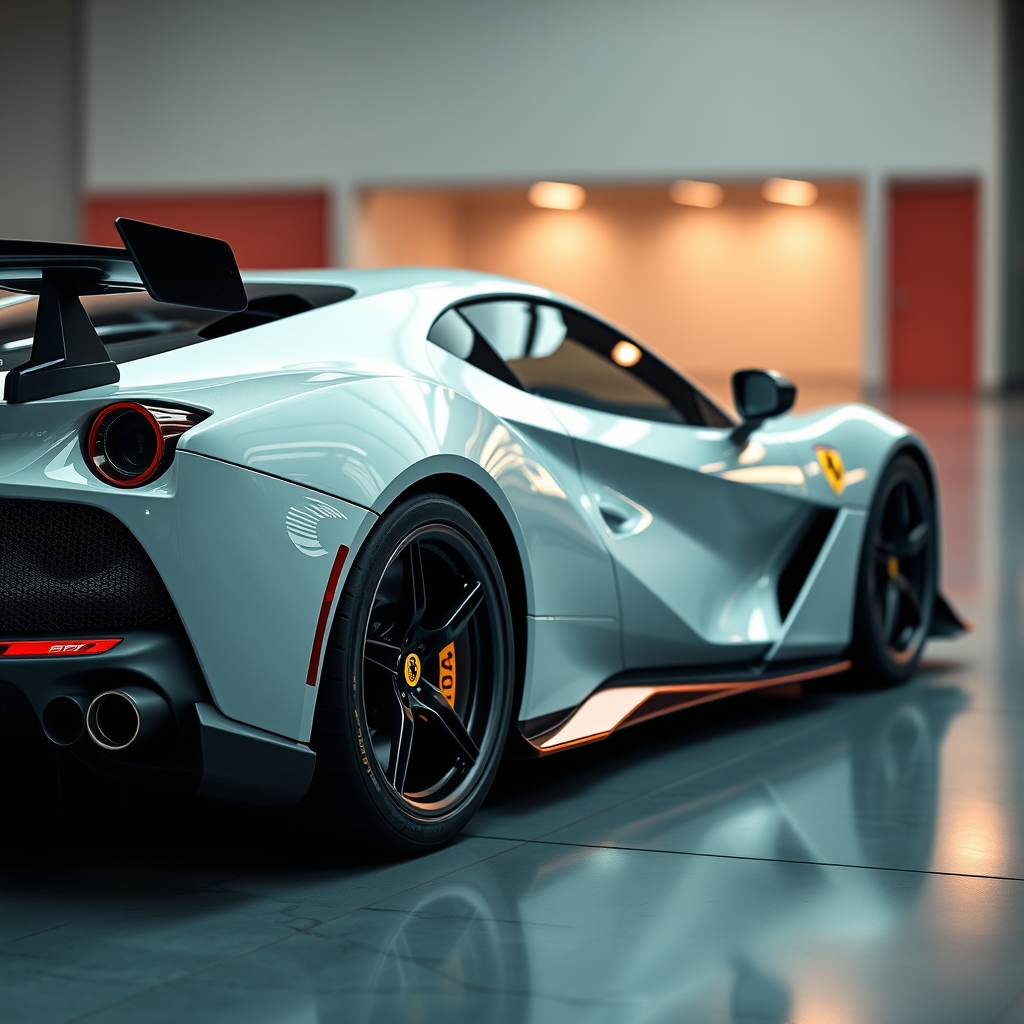
Ferrari 296 Challenge Stradale (2027): Complete In-Depth Guide
Introduction: The Rebirth of an Iconic Moniker
The automotive landscape is changing rapidly, but Ferrari continues to prove that electrification can elevate emotional driving engagement. Maranello has a long tradition of taking its mid-engine berlinetta models, stripping out excess weight, sharpening the chassis, adding radical aerodynamic upgrades, and unleashing a track-focused weapon for both circuit and road. Enthusiasts remember the legendary line: the 360 Challenge Stradale, the 430 Scuderia, the 458 Speciale, and the 488 Pista. Now, the 296 platform prepares to receive its own extreme evolution with the anticipated 2027 Ferrari 296 Challenge Stradale.
When the Ferrari 296 GTB first debuted, it challenged traditionalist thinking. It replaced the venerable twin-turbo V8 engine with a 120-degree twin-turbo V6 coupled to an electric motor. Despite skepticism from purists, the car quickly silenced critics by delivering 819 horsepower, astonishing throttle response, and an exhaust note nicknamed the piccolo V12, or little V12. With the 296 Challenge one-make race car and the Le Mans-winning 499P hypercar proving the endurance and speed of this engine architecture, a road-going track special represents the natural next step. In this extensive guide, we explore the expected engineering, design, aerodynamics, performance numbers, and overall philosophy of the 2027 Ferrari 296 Challenge Stradale.
The Heritage: From 360 Challenge Stradale to Modern Era
To understand the importance of the 2027 Ferrari 296 Challenge Stradale, one must look back at Ferrari history. In 2003, Ferrari unveiled the 360 Challenge Stradale. It was not just a slightly tuned 360 Modena. It was a direct translation of the Ferrari Challenge racing car into a road-legal package. It brought carbon-ceramic brakes as standard equipment, stripped down the interior with bare aluminum and carbon fiber door panels, installed a raucous titanium exhaust, and recalibrated the gearbox for lightning-quick shifts.
That car established a formula that Ferrari has perfected over two decades. The 430 Scuderia followed in 2007, honed with the help of Michael Schumacher and pioneering rapid electronic differential management. In 2013, the 458 Speciale delivered arguably the greatest naturally aspirated V8 road engine in history, paired with active aerodynamic flaps. In 2018, the 488 Pista introduced Formula 1 S-Duct aerodynamic systems and massive turbo punch.
The 2027 Ferrari 296 Challenge Stradale carries this proud legacy into the plug-in hybrid generation. It takes lessons learned from the customer racing series, the GT3 international championships, and the Hypercar class at the 24 Hours of Le Mans, condensing those extreme racing breakthroughs into a machine that wears license plates.
Powertrain Engineering: Maximizing the 120-Degree Hybrid V6
At the mechanical heart of the 2027 Ferrari 296 Challenge Stradale sits the revolutionary F163 engine family. In standard GTB specification, the 2.9-liter, 120-degree hot-V twin-turbocharged six-cylinder produces 654 horsepower on its own, which represents an astonishing specific output of 218 horsepower per liter. Working alongside the rear-mounted MGU-K electric motor, total system output reaches 819 horsepower.
For the Challenge Stradale edition, Ferrari engineers in Maranello have pushed these mechanical components even further. Expected hardware refinements include:
- Lightened crankshaft and connecting rods made from motorsport-grade titanium alloys.
- Optimized combustion chambers with increased compression ratios and reinforced cylinder heads.
- Larger, lower-inertia turbocharger compressor wheels running higher boost pressures without sacrificing throttle pick-up.
- An uncorked Inconel exhaust manifold designed to reduce backpressure while amplifying the unique acoustic signature across high frequencies.
- Upgraded inverter technology and recalibrated battery energy delivery mappings to unleash higher electric surge outputs during full throttle application.
These modifications allow the internal combustion engine to produce roughly 690 to 700 horsepower independently. When merged with an upgraded electric motor contributing around 180 horsepower, total system output is expected to approach 870 to 880 horsepower. More importantly, throttle response will be practically instantaneous. The electric motor continues to fill any minor transient turbo lag, creating a linear, aggressive surge that pulls ferociously up to the 8,500 RPM redline.
Aerodynamic Innovation: Lessons from the 296 GT3 and Challenge
Aerodynamics form the core of every Ferrari special series car. The base 296 GTB already produces significant downforce thanks to its active rear spoiler, which deploys to create a high-downforce setup during braking and aggressive cornering. However, the 2027 Ferrari 296 Challenge Stradale adopts an entirely more aggressive aerodynamic philosophy borrowed directly from the track-only 296 Challenge and 296 GT3 race cars.
Front Section and Air Management
Up front, the front bumper has been completely redesigned with wider, deeper air dams and an extended carbon-fiber splitter. The cooling radiators for the engine and the hybrid electrical systems have been tilted at revised angles to optimize airflow extraction through new vents on the front hood. Front fender louvers, cut directly into the exposed carbon fiber fenders, bleed off turbulent high-pressure air generated by the spinning front tires, reducing front axle lift and stabilizing high-speed turn-in.
Underbody Venturi Tunnels
Much of the downforce generated by modern Ferrari sports cars comes from unseen underbody wizardry. The 296 Challenge Stradale features extended front diffuser strakes and massive rear Venturi tunnels. Because the twin turbos sit inside the 120-degree V of the engine, the lower sides of the motor bay remain compact. This layout allows aerodynamicists to carve deep, wide underfloor tunnels that draw the chassis flat against the asphalt as track speeds rise.
Active and Passive Rear Aerodynamics
At the rear, the car balances raw downforce with drag efficiency. While the 296 Challenge race car uses a giant fixed rear wing, the street-legal Challenge Stradale uses an enhanced active rear wing system coupled with an aggressive rear lip spoiler. Under extreme braking, the active element rises sharply, acting as an air brake and shifting the aerodynamic balance rearward to prevent chassis instability. Working in conjunction with a massive carbon-fiber rear diffuser featuring vertical fences, the setup can generate well over 450 kilograms of downforce at 250 km/h in its most aggressive track mode.
Weight Reduction: The Relentless Battle Against Mass
Because the 296 is a plug-in hybrid vehicle carrying an onboard high-voltage battery pack and electric motor, weight management is critical. The base 296 GTB already incorporates lightweight aluminum chassis design, but the Challenge Stradale goes on an aggressive diet to shave off roughly 60 to 80 kilograms (132 to 176 pounds).
Every single component has been scrutinized for potential weight savings:
- Full Carbon Fiber Body Panels: The front hood, front and rear bumpers, roof panel, engine cover, and rear diffuser are rendered entirely in pre-preg carbon fiber.
- Lexan Rear Engine Screen: The traditional glass rear window above the engine bay is replaced by lightweight motorsport polycarbonate with cooling slots.
- Titanium Hardware: Wheel bolts, exhaust components, and suspension springs make extensive use of lightweight titanium alloys.
- Lightweight Interior Trim: The cabin dispenses with heavy sound deadening, standard deep carpets, and leather armrests in favor of exposed carbon composites, lightweight technical fabric, and Alcantara.
- Carbon Fiber Wheels: Optional single-piece carbon fiber wheels significantly reduce unsprung rotational mass, vastly improving steering agility and damper reaction times.
Chassis Dynamics, Brakes, and Electronic Controls
Power and aerodynamic grip mean nothing without total chassis composure. Ferrari leads the industry in integrating electronic vehicle dynamics controls with mechanical chassis components. The 2027 296 Challenge Stradale represents the cutting edge of this philosophy.
Multimatic DSSV Dampers
Following the tradition established by the Assetto Fiorano packages on previous models, the Challenge Stradale moves away from magnetorheological dampers in favor of competition-derived Multimatic Dynamic Suspensions Spool Valve (DSSV) shock absorbers. These dampers provide unmatched precision, keeping tire contact patches perfectly uniform over aggressive curbs and high-speed compressions on the track.
Evo ABS and 6-Way Chassis Sensor
The car incorporates the advanced 6-way Chassis Dynamic Sensor (6w-CDS) alongside the Evo ABS braking control unit. Unlike traditional wheel-speed sensors alone, this system calculates vehicle trajectory, yaw rate, lateral acceleration, and steering angle with pinpoint accuracy. The system knows precisely how much grip each tire has, allowing drivers to brake much deeper into corners while the car manages brake pressures across all four corners smoothly.
Carbon-Ceramic Matrix Brakes (CCM-R Plus)
Stopping power is handled by the latest evolution of Brembo CCM-R Plus carbon-ceramic brake discs. These racing discs use a specialized three-dimensional carbon weave that dramatically improves heat dissipation and frictional stability under sustained track abuse. Paired with high-performance brake pads and custom ducting that guides cool air directly into the center of the calipers, brake fade is completely eradicated, even during long sessions at demanding circuits like Fiorano, Spa-Francorchamps, or Sebring.
Interior Design: Pure Functional Minimalism
Step inside the cabin of the 2027 Ferrari 296 Challenge Stradale, and the racing pedigree is immediately obvious. While the GTB offers a blend of grand touring luxury and digital innovation, the Challenge Stradale strips away all unnecessary distractions to focus entirely on the driver.
The door panels are formed from single sheets of molded matte carbon fiber, equipped with minimalist pull straps instead of conventional handles. The center console is sculpted into a slim carbon bridge holding only the essential gear selection controls, styled after Ferrari classic open-gate shifters. The floor features raw, textured aluminum plates rather than plush carpeting, emphasizing functional durability.
The steering wheel features an updated human-machine interface. Ferrari engineers have addressed user feedback, replacing finicky capacitive touch controls with more tactile, physical buttons and thumb rollers. The Manettino dial remains front and center, allowing instant switching between Wet, Sport, Race, CT Off, and ESC Off modes. Directly behind the steering wheel sits the curved digital instrument binnacle, displaying customized track-focused graphics that prioritize gear position, RPM shift lights, lap times, tire temperatures, and hybrid battery energy deployment.
Seating consists of custom one-piece carbon fiber monocoque racing buckets. Trimmed in perforated Alcantara to prevent driver sliding during heavy lateral G-forces, these seats offer incredible lumbar and lateral support. Four-point racing harnesses are integrated cleanly, ready for track days without requiring aftermarket safety installations.
Expected Technical Specifications
Below is a detailed overview of the estimated and projected technical specifications for the 2027 Ferrari 296 Challenge Stradale based on racing developments and historical special series progression:
| Specification Category | Ferrari 296 Challenge Stradale (2027 Projected) |
|---|---|
| Engine Type | 120° Twin-Turbocharged 2.9-Liter V6 (Mid-Rear Mounted) |
| Electric Motor | Rear-mounted MGU-K Electric Motor |
| ICE Output | Approximately 695 hp @ 8,500 RPM |
| Electric Output | Approximately 180 hp (132 kW) |
| Total System Power | Approximately 875 hp (887 PS) |
| Peak Torque | Approximately 770 Nm (568 lb-ft) |
| Transmission | 8-Speed Dual-Clutch F1 Transmission with Retuned Ratios |
| Drivetrain | Rear-Wheel Drive with Electronic Differential (E-Diff) |
| Dry Weight | Approx. 1,410 kg (3,108 lbs) with lightweight options |
| Acceleration 0-100 km/h (0-62 mph) | 2.7 seconds |
| Acceleration 0-200 km/h (0-124 mph) | 6.9 seconds |
| Top Speed | Over 335 km/h (208 mph) |
| Braking (100 km/h to 0) | Under 29.5 meters |
| Suspension | Multimatic Spool-Valve (DSSV) Racing Dampers |
| Brakes | Brembo CCM-R Plus Carbon-Ceramic Discs with Monobloc Calipers |
Performance Benchmarks: Redefining Fiorano Lap Times
Whenever Ferrari prepares a special series model, the benchmark always comes down to the stopwatch at the company’s private test track, the Fiorano Circuit. The standard Ferrari 296 GTB, fitted with the Assetto Fiorano handling package, managed a blistering lap time of 1 minute and 21 seconds flat. For context, that is faster than the flagship V12 Ferrari 812 Competizione and nearly matches the all-wheel-drive SF90 Stradale.
With the 2027 Ferrari 296 Challenge Stradale, engineers aim to push lap times even lower. By combining an extra 50-plus horsepower, significant weight loss, stickier Michelin Pilot Sport Cup 2 R compound tires, and substantially higher aerodynamic downforce, lap times are expected to drop below the 1 minute, 20 second barrier. Achieving a 1:19.5 or quicker would place this car in the realm of genuine race machinery, establishing it as one of the fastest street-legal vehicles ever to lap the fabled Italian circuit.
Competitive Landscape: The Track-Day Supercar War
The track-focused supercar segment is one of the most fiercely contested battlegrounds in the modern performance industry. If launched for the 2027 model year, the Ferrari 296 Challenge Stradale will face intense competition from several iconic rivals:
Porsche 911 GT3 RS
The Porsche 911 GT3 RS represents the current benchmark for pure aerodynamic theater and track precision. While the Porsche relies on a naturally aspirated 4.0-liter flat-six making 518 horsepower, its active DRS rear wing and motorsport suspension deliver staggering cornering speeds. The Ferrari 296 Challenge Stradale will have a massive straight-line speed advantage thanks to its near-880-horsepower hybrid V6, creating an intriguing battle between sheer Italian firepower and surgical German aerodynamic balance.
McLaren 750S / Upcoming LT Variant
McLaren continues to be Ferrari’s most direct mid-engine rival. The McLaren 750S is exceptionally light, thanks to its carbon-fiber tub chassis. An inevitable Longtail (LT) version of that car will bring extreme aero, stiffened dampers, and stripped-down curb weights. The 296 Challenge Stradale counters McLaren with its hybrid instant torque delivery and sophisticated electronic traction algorithms.
Lamborghini Temerario Track Variants
Lamborghini has introduced the Temerario, moving to a twin-turbo V8 hybrid setup that revs to an astonishing 10,000 RPM. A lightweight, track-focused SV or Performante variant will inevitably arrive around 2027 or 2028. Ferrari needs the 296 Challenge Stradale to be sharp enough to defend Maranello’s honor against Sant’Agata Bolognese’s high-revving hybrid challenger.
Usability and the Hybrid System on the Road
One question often asked of hardcore, track-focused vehicles is whether they can still be driven on public roads without punishing the driver. Traditional track specials like the original 360 Challenge Stradale were notoriously harsh, loud, and uncompromising. However, modern electronics allow a much wider spectrum of capability.
The 2027 296 Challenge Stradale will likely retain the eDrive all-electric mode. While the pure electric range remains modest (around 15 miles or 25 kilometers), it allows owners to leave their neighborhoods silently early in the morning without disturbing anyone with the ferocious cold-start exhaust note. Once out on open mountain passes or race tracks, switching into Qualifying or Race mode unlocks the combined fury of both the engine and electric motor.
While the fixed-rate Multimatic spool-valve dampers will provide a stiffer, more uncompromising ride over rough pavement than the standard car’s adaptive dampers, the structural rigidity of the aluminum chassis prevents unwanted vibrations from unsettling the cabin. It remains a road car that you can genuinely drive to the track, dominate lap sessions all afternoon, and drive home comfortably.
Collectibility and Future Market Value
Special series Ferrari models have consistently proven to be blue-chip automotive investments. Historical trends show that cars bearing the Scuderia, Speciale, or Pista badges not only hold their value far better than standard production models, but frequently appreciate beyond their original sticker prices as the years pass.
Because the 296 Challenge Stradale represents the peak development of Ferrari’s first mid-engine hybrid V6 generation, collectors will view it as a milestone machine. Production will naturally be limited by time rather than a strict numbered plaque, with production runs typically spanning only two to three years. Priority allocation will be given to Ferrari’s most loyal clients, particularly those who participate in the Ferrari Challenge racing series or own multiple previous special series models. Secondary market premiums are expected to soar the moment deliveries begin.
Conclusion: The Ultimate Expression of Modern Ferrari Engineering
The Ferrari 296 Challenge Stradale (2027) represents the convergence of high-voltage efficiency, racing aerodynamics, and unfiltered Italian driving passion. It proves that the downsizing of engine displacement and the introduction of hybrid components do not mean the death of supercar theater. Instead, when executed by the engineers at Maranello, electrification serves as an amplifier for raw speed and dynamic agility.
With an aggressive aerodynamic package derived straight from endurance racing, an explosive powertrain pushing toward 880 horsepower, uncompromising weight-saving materials, and digital handling systems that make average drivers feel like racing drivers, the Challenge Stradale moniker is poised for a spectacular rebirth. It stands as a testament to Ferrari’s relentless pursuit of automotive perfection, bridging the gap between the racetrack and the open road like few cars ever created.




news via inbox
Nulla turp dis cursus. Integer liberos euismod pretium faucibua