How to Understand Apple’s Potential Return to the Server Market with Nvidia Technology
How to Understand Apple’s Potential Return to the Server Market with Nvidia Technology
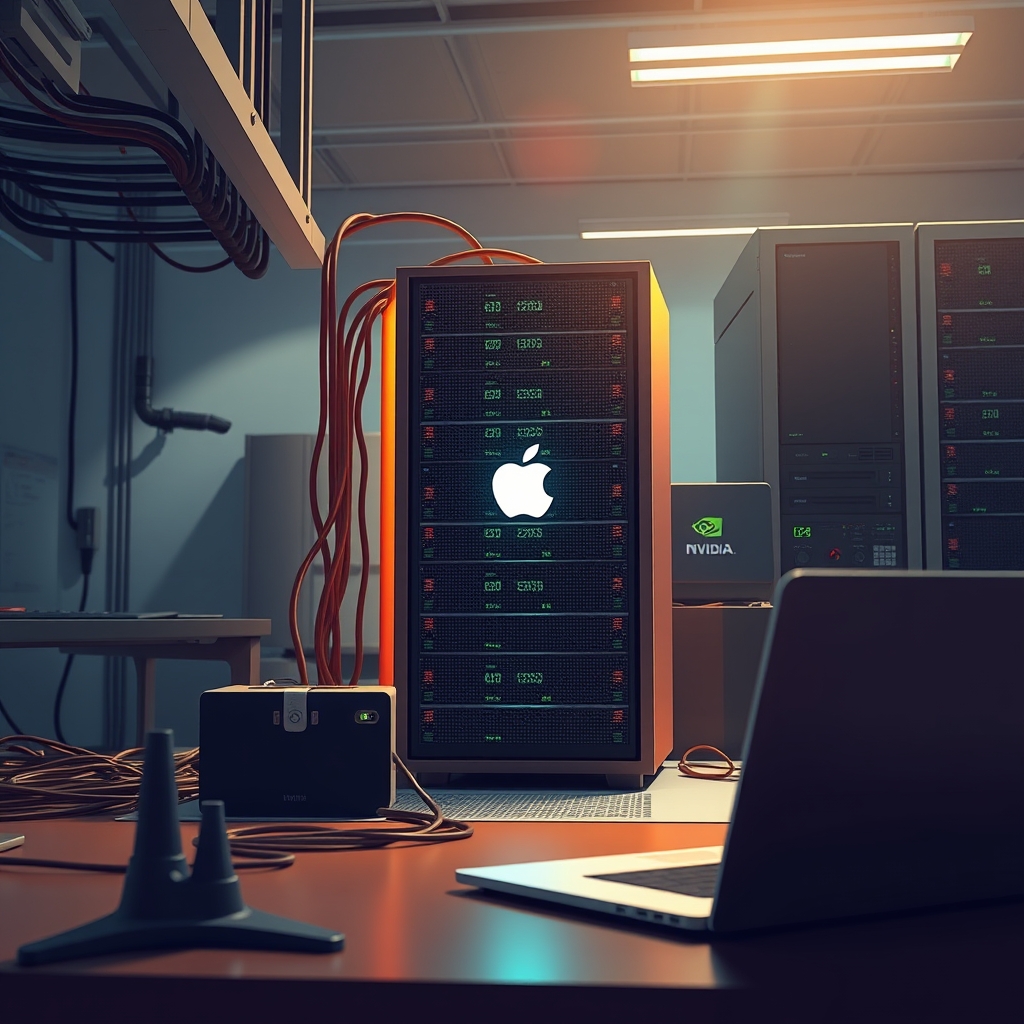
Apple has long been associated with sleek consumer devices, but a recent report from The Information suggests the company may be gearing up to re‑enter the enterprise server arena. The proposed solution would pair Apple’s upcoming “M8” series chips with Nvidia networking hardware to deliver an AI‑focused server platform aimed at external customers. This guide walks you through the technical foundations, market implications, and practical steps you can take to assess whether Apple’s new server could fit into your organization’s roadmap.
1. Why Apple Might Re‑Enter the Server Space
Understanding Apple’s motivation is the first step in evaluating the potential impact of its server offering. Several factors converge:
- Revenue Diversification: With iPhone sales plateauing, Apple is exploring high‑margin B2B opportunities.
- AI Demand Surge: Enterprises are rapidly adopting generative AI models that require specialized hardware.
- Vertical Integration: Apple already designs silicon, software, and cloud services, giving it a unique ability to control the entire stack.
- Brand Trust: Apple’s reputation for reliability and security could attract enterprises wary of traditional vendor lock‑in.
By offering a turnkey AI server, Apple can leverage these strengths while tapping into a market projected to exceed $150 billion by 2028.
2. Understanding the “M8” Chip Family
The “M8” series is rumored to be the next evolution of Apple’s custom silicon, building on the success of the M1/M2 lines. Key technical characteristics likely include:
- Advanced 5‑nm or 3‑nm Process: Higher transistor density for better performance per watt.
- Increased CPU Core Count: Up to 24 high‑performance cores and 8 efficiency cores.
- Enhanced Neural Engine: Dedicated AI acceleration capable of handling hundreds of teraflops.
- Unified Memory Architecture: Up to 1 TB of LPDDR5X, reducing latency for data‑intensive workloads.
- Security Enclave Integration: Built‑in hardware encryption and secure boot.
These features position the M8 as a strong contender for AI inference and training workloads, especially when paired with high‑speed networking.
3. Nvidia Networking Hardware: What It Brings
Nvidia’s networking portfolio, especially the ConnectX family, is widely used in hyperscale data centers. When Apple talks about “incorporating Nvidia networking hardware,” it likely refers to:
- RDMA‑Enabled Ethernet: Low‑latency, high‑throughput communication essential for distributed AI training.
- SmartNIC Capabilities: Offloading network stack processing to free CPU cycles for AI tasks.
- PCIe 5.0 / CXL Support: Future‑proof bandwidth for next‑generation accelerators.
- GPU‑Ready Fabric: Seamless integration with Nvidia GPUs, should customers choose a hybrid CPU‑GPU configuration.
The synergy between Apple’s silicon efficiency and Nvidia’s networking performance could create a compelling value proposition for latency‑sensitive AI workloads.
4. How the Apple‑Nvidia Stack Could Be Assembled
Below is a high‑level architectural diagram of the expected stack:
- Base System Board: Custom Apple-designed motherboard housing one or more M8 SoCs.
- Memory Subsystem: Unified LPDDR5X with optional NVMe SSDs for fast local storage.
- Nvidia SmartNIC: ConnectX‑7 or later, providing up to 400 Gbps Ethernet with RDMA.
- Optional GPU Module: Nvidia H100 or future Hopper‑based GPUs for heavy training workloads.
- Software Layer: macOS Server‑derived OS with container orchestration (Kubernetes) and Apple‑optimized AI frameworks (Core ML, TensorFlow‑Apple).
- Management & Security: Apple’s Device Management (MDM) tools, Secure Enclave, and end‑to‑end encryption.
This modular approach lets customers start with CPU‑only AI inference and scale up to GPU‑accelerated training as needed.
5. Target Customers and Use Cases
Apple’s server is unlikely to aim at the generic web‑hosting market. Instead, it will focus on high‑value verticals where Apple’s brand and technology intersect with AI demand:
- Creative Media & Entertainment: Real‑time video rendering, VFX, and generative content pipelines.
- Healthcare & Life Sciences: Secure AI analysis of medical imaging and genomics data.
- Financial Services: Low‑latency risk modeling and fraud detection.
- Retail & E‑Commerce: Personalized recommendation engines and inventory forecasting.
- Edge AI for IoT: On‑premise inference for autonomous devices requiring strict privacy.
These sectors value performance, security, and integration with Apple’s broader ecosystem, making them prime candidates for the new offering.
6. Competitive Landscape: Apple vs. Traditional Vendors
Apple will be entering a crowded field dominated by Dell, HPE, Lenovo, and cloud giants like AWS, Azure, and Google Cloud. Key differentiators could include:
| Aspect | Apple’s Potential Edge | Traditional Vendors |
|---|---|---|
| Hardware‑Software Integration | Seamless macOS + M8 + Core ML stack | Mixed OS ecosystems |
| Energy Efficiency | Apple silicon’s low power per FLOP | Higher TDP CPUs/GPUs |
| Security | Secure Enclave, hardware‑rooted trust | Varies by vendor |
| Brand Loyalty | Strong among creative professionals | Enterprise‑focused branding |
| Pricing Model | Potential subscription or hardware‑as‑service | CAPEX‑oriented |
Understanding these contrasts helps you decide whether Apple’s approach aligns with your strategic goals.
7. Evaluating Performance Metrics
When testing the Apple‑Nvidia server, focus on the following benchmarks:
- Inference Latency: Measure time‑to‑result for models like GPT‑4‑mini or Stable Diffusion.
- Throughput (Requests/sec): Evaluate batch processing capabilities under sustained load.
- Power Consumption (W/TFLOP): Compare efficiency against AMD EPYC + Nvidia GPU combos.
- Network Latency: Use RDMA ping‑pong tests to verify SmartNIC performance.
- Scalability: Test Kubernetes auto‑scaling across multiple nodes.
Documenting these metrics in a reproducible test harness will give you a data‑driven basis for procurement decisions.
8. Pricing and Business Model Considerations
Apple’s historic pricing strategy leans toward premium margins, but enterprise hardware often follows a different model. Anticipate the following possibilities:
- Up‑Front Purchase: Traditional CAPEX with optional support contracts.
- Hardware‑as‑a‑Service (HaaS): Monthly or annual fees that include hardware, software updates, and MDM.
- Hybrid Cloud Integration: Pay‑as‑you‑go usage when Apple bundles the server with iCloud or Apple Business Essentials.
Run a total cost of ownership (TCO) analysis that includes electricity, cooling, support, and potential productivity gains from tighter Apple ecosystem integration.
9. Steps to Assess the Offering for Your Organization
Follow this practical checklist to determine fit:
- Define Business Objectives: Identify the AI workloads you need to accelerate.
- Map Technical Requirements: CPU cores, memory, storage, network bandwidth, and security compliance.
- Request a Proof‑of‑Concept (PoC): Ask Apple or its channel partners for a trial unit.
- Run Benchmark Suites: Use MLPerf or custom workloads to gather performance data.
- Evaluate Integration Effort: Assess compatibility with existing CI/CD pipelines, monitoring tools, and data governance policies.
- Calculate ROI: Combine performance gains, operational savings, and potential revenue uplift.
- Make an Informed Decision: Choose purchase, subscription, or defer based on the analysis.
10. Migration Path: From Existing Infrastructure to Apple AI Server
Transitioning to a new hardware platform can be disruptive. A phased migration reduces risk:
- Phase 1 – Containerization: Package existing AI workloads in Docker/Kubernetes containers to ensure portability.
- Phase 2 – Parallel Deployment: Run Apple servers alongside current hardware for side‑by‑side performance comparison.
- Phase 3 – Data Synchronization: Use rsync or distributed file systems (e.g., Lustre) to mirror datasets.
- Phase 4 – Cut‑Over: Gradually shift traffic to Apple nodes once stability and performance thresholds are met.
- Phase 5 – Decommissioning: Retire legacy servers, reclaim rack space, and reallocate budget.
Document each step, assign owners, and maintain rollback procedures to safeguard against unforeseen issues.
11. Security and Privacy Implications
Apple’s emphasis on privacy could be a decisive factor for regulated industries. Key security features to verify include:
- Secure Enclave: Hardware‑based key management and attestation.
- Encrypted Storage: Full‑disk encryption with TPM‑compatible key storage.
- Zero‑Trust Networking: Integration with Apple’s Private Relay and VPN‑like tunnel protocols.
- Compliance Certifications: Look for ISO 27001, SOC 2, HIPAA, and GDPR readiness.
- Patch Management: macOS Server‑derived update cadence and Apple’s rapid security response.
Conduct a formal security audit before committing to production deployment.
12. Potential Risks and Mitigation Strategies
Every emerging technology carries uncertainties. Anticipate the following risks and plan mitigations:
| Risk | Impact | Mitigation |
|---|---|---|
| Supply‑Chain Constraints | Delayed hardware delivery | Negotiate staggered shipments; keep a buffer of existing capacity. |
| Vendor Lock‑In | Difficulty switching providers | Use container‑native workloads; maintain data portability. |
| Software Compatibility | Legacy tools may not run on macOS Server | Validate with PoC; consider cross‑platform wrappers. |
| Pricing Uncertainty | Higher than expected OPEX | Secure fixed‑price contracts; perform TCO analysis. |
| Support Ecosystem | Limited enterprise‑grade support channels | Engage Apple’s Business Essentials or third‑party integrators. |
13. Future Outlook: What to Watch for in 2027
Apple’s server initiative is still speculative, but several signals will indicate its trajectory:
- Official Announcements: Look for a dedicated “Apple Server” event at WWDC or a press release in Q1 2027.
- Developer Tooling: Release of server‑grade SDKs, Core ML extensions, or a macOS Server beta.
- Partnership Confirmation: Formal agreements with Nvidia, Intel (for PCIe), or major cloud providers.
- Early Customer Wins: Case studies from media studios, hospitals, or fintech firms.
- Pricing Tiers: Introduction of entry‑level “M8‑Lite” models for SMBs.
Staying informed will allow you to pivot quickly and capitalize on the first wave of Apple‑powered AI infrastructure.
Conclusion
Apple’s rumored AI server, built around the next‑generation M8 silicon and bolstered by Nvidia’s high‑performance networking, could reshape how enterprises approach AI workloads. By dissecting the hardware architecture, understanding target use cases, and following a disciplined evaluation process, you can determine whether this offering aligns with your organization’s performance, security, and financial goals. Keep an eye on official announcements, request a PoC, and run thorough benchmarks—those steps will ensure you make a data‑driven decision when Apple finally steps back onto the server stage.



news via inbox
Nulla turp dis cursus. Integer liberos euismod pretium faucibua