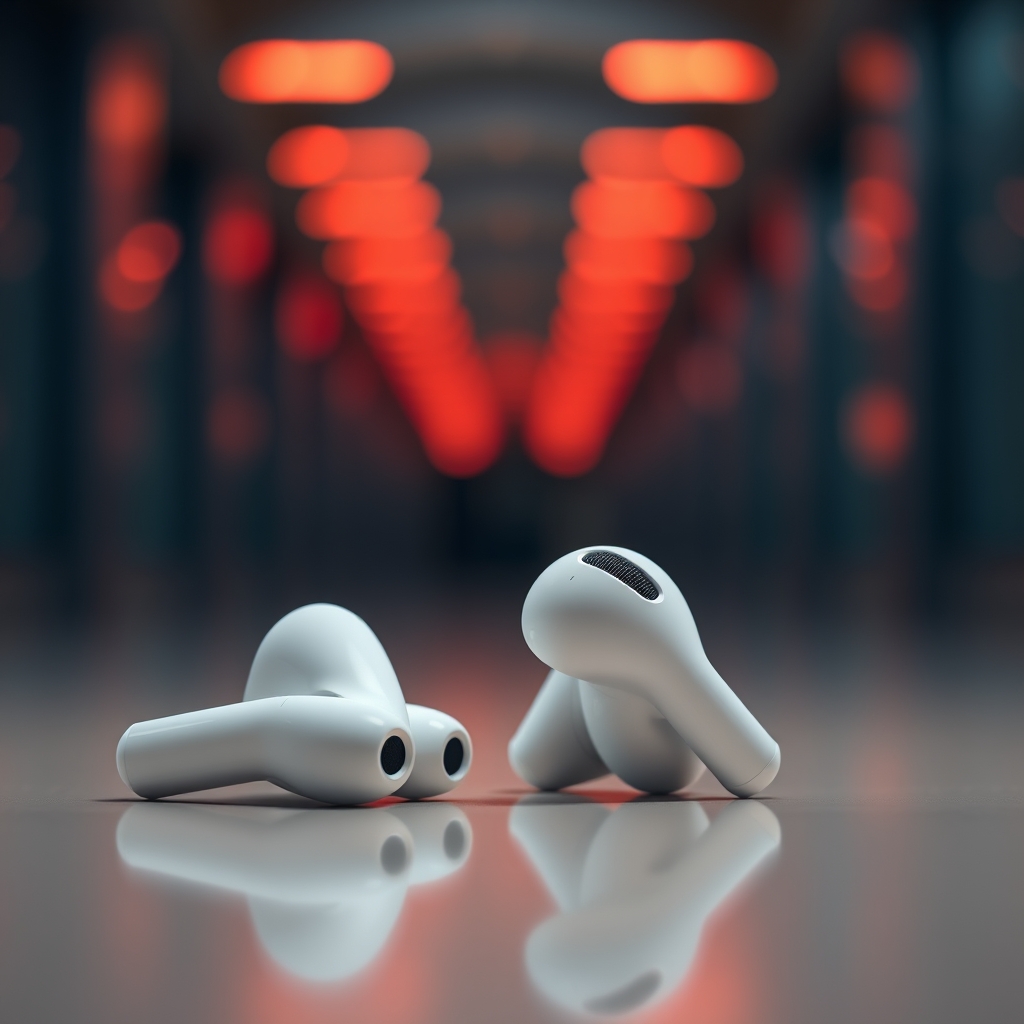
Apple’s Camera-Equipped AirPods Confirmed: What You Need to Know
Apple’s Camera-Equipped AirPods Confirmed: See Them in Action
Apple has consistently pushed the boundaries of personal audio technology. From the initial release of the standard AirPods to the advanced Active Noise Cancellation found in the AirPods Pro, the Cupertino tech giant has dominated the wireless earbud market. Now, recent reports and supply chain leaks suggest that Apple is working on something truly groundbreaking: AirPods equipped with built-in infrared or optical cameras. While it sounds like science fiction, industry insiders and patent filings point to a future where your earbuds might actually be able to see the world around you.
(adsbygoogle = window.adsbygoogle || []).push({});
At TechRook, we have been closely tracking these developments. In this comprehensive guide, we will break down everything you need to know about these rumored camera-equipped AirPods, how the technology might work, potential privacy concerns, and what this means for the future of spatial computing and Apple’s ecosystem.
The Genesis of the Rumor: What Do the Reports Say?
The rumor mill surrounding camera-equipped AirPods gained significant traction following reports from reliable supply chain analysts, most notably Ming-Chi Kuo. According to these insider reports, Apple is planning to begin mass production of new AirPods featuring infrared camera modules around the year 2026. These cameras are not designed to take traditional photos or record videos of your surroundings in the way an iPhone does. Instead, they are engineered to capture infrared image data, similar to the technology used in Face ID sensors on iPhones and iPads.
Apple has filed numerous patents over the last few years detailing various use cases for optical sensors embedded inside wearable audio devices. These patents describe earbuds that can monitor user posture, detect hand gestures, and interact seamlessly with Apple’s spatial computing hardware, such as the Apple Vision Pro. The confirmation of these supply chain movements suggests that what was once just a conceptual patent is now actively moving down the pipeline toward commercial reality.
How Infrared Cameras Inside AirPods Will Work
To truly understand why Apple would put cameras inside a pair of earbuds, we need to look at the underlying technology. Traditional RGB cameras capture light in the visible spectrum to produce high-resolution images and videos. Infrared cameras, however, detect infrared radiation. This allows the device to measure depth, map environments, and track movements even in low-light conditions without invading personal privacy in the way a standard camera might.
Here are the primary ways these infrared cameras are expected to function:
- Spatial Audio Enhancement: By tracking the exact position of your head and ears relative to your surroundings, the AirPods can dynamically adjust spatial audio rendering with pinpoint accuracy.
- Gesture Control: Instead of tapping the stem of your earbud or relying entirely on voice commands, future AirPods could let you control media playback or answer calls using subtle hand gestures captured by the downward-facing cameras.
- Environmental Awareness: The cameras could assist in understanding your immediate physical environment, feeding contextual data back to your connected iPhone or Apple Vision Pro.
Synergy with the Apple Vision Pro Ecosystem
One of the most compelling reasons for Apple to integrate cameras into AirPods is the symbiotic relationship with the Apple Vision Pro. Spatial computing relies heavily on accurate sensor data, hand tracking, and spatial awareness. While the Vision Pro itself is packed with cameras and sensors, wearing AirPods equipped with their own optical sensors could dramatically improve latency and tracking precision.
Imagine wearing your Vision Pro headset while pairing it with these advanced AirPods. The internal and external cameras on the earbuds could work in tandem with the headset to create a more cohesive audio-visual environment. When you turn your head, the audio cues adjust not just based on the headset’s sensors, but also through localized ear-level spatial tracking. This creates an ultra-realistic soundscape where virtual objects feel genuinely grounded in the physical world.
Furthermore, as Apple continues to refine its artificial intelligence initiatives under the banner of Apple Intelligence, having wearable devices equipped with diverse sensor arrays opens up new possibilities for ambient computing. Your AirPods could eventually act as personal AI assistants that not only hear your voice and play your music, but also understand visual cues from your immediate perspective.
Addressing Privacy Concerns: Can You Trust Camera-Equipped Earbuds?
Whenever a tech company introduces a camera to a device that was previously camera-free, privacy is the first concern that comes to mind for consumers. The idea of wearing tiny cameras in your ears naturally raises eyebrows. People worry about accidental recordings, data harvesting, and the potential for surveillance in private spaces.
Apple has positioned itself strongly as a defender of user privacy over the years, and this philosophy will likely dictate how camera-equipped AirPods are marketed and implemented. Based on Apple’s track record with Face ID and device-level security, several safeguards are expected:
- On-Device Processing: All image data captured by the infrared sensors will likely be processed locally on the device’s chip rather than uploaded to cloud servers.
- Infrared Limitation: Because the sensors are optimized for infrared data and spatial mapping rather than high-definition photography, they cannot be used to spy on people or take traditional snapshots.
- Transparent Permissions: Just like apps requesting access to your iPhone camera, iOS will likely provide granular controls over how and when your AirPods sensors are utilized.
Despite these anticipated measures, public perception remains a hurdle. Apple will need to clearly communicate the exact purpose of these sensors to reassure consumers that the technology is designed for utility and immersion, not surveillance.
Comparative Analysis: Where Do AirPods Stand Against Competitors?
The wearable audio market is intensely competitive. Brands like Sony, Bose, Samsung, and Google constantly push out new earbuds with advanced noise cancellation, health-tracking features, and high-res audio codecs. However, none of these major competitors have announced plans to integrate optical or infrared cameras into standard wireless earbuds.
If Apple successfully launches camera-equipped AirPods, it will create a massive technological gap between Apple’s ecosystem and competing platforms. While other manufacturers focus primarily on fitness tracking, heart rate monitoring, or temperature sensors inside earbuds, Apple is steering the category toward spatial computing integration and advanced machine learning interaction.
(adsbygoogle = window.adsbygoogle || []).push({});
Let us look at a quick comparison of current industry trends versus Apple’s rumored trajectory:
| Feature Category | Standard Industry Competitors | Apple’s Rumored AirPods |
|---|---|---|
| Primary Focus | Audio fidelity & ANC | Audio fidelity + Spatial Computing |
| Health Tracking | Heart rate & temperature | Posture monitoring & spatial awareness |
| Control Methods | Touch controls & voice assistants | Touch, voice, and advanced gesture recognition |
| Ecosystem Integration | Cross-platform smartphone support | Deep integration with iOS, macOS, and VisionOS |
This strategic divergence highlights Apple’s unique advantage. By treating AirPods not just as music accessories, but as vital nodes in a broader wearable computing network, Apple justifies a premium product positioning that competitors will find difficult to replicate.
What This Means for Health and Fitness Tracking
In recent years, AirPods have increasingly doubled as wellness devices. Features like conversational awareness, live listen capabilities, and clinical-grade hearing aid functionalities introduced in iOS updates demonstrate Apple’s commitment to personal health.
With infrared cameras added to the mix, health tracking could expand into new domains, particularly posture correction and ergonomic monitoring. Poor posture is a common modern ailment caused by hours of slouching over smartphones, laptops, and tablets. Infrared cameras inside the ears could monitor the alignment of your head, neck, and shoulders relative to your torso. If you begin to slouch for an extended period, your AirPods could gently nudge you via a subtle audio chime or a notification on your Apple Watch to sit up straight.
Additionally, subtle facial movements or eye tracking could provide insights into user fatigue levels, helping the ecosystem understand when you might need to take a break from your screen.
Design Challenges and Hardware Hurdles
Packing advanced optical sensors, infrared emitters, and micro-cameras into the tiny chassis of an earbud is no small engineering feat. Apple’s design philosophy prioritizes sleek aesthetics, lightweight comfort, and ergonomic fit. Adding new hardware components risks increasing the physical size and weight of the earbuds, which could negatively impact long-term wearability.
Furthermore, battery life is always a critical bottleneck for wireless earbuds. Powering infrared cameras and continuous spatial tracking requires significant energy. Apple engineers will need to develop ultra-efficient micro-chips—potentially utilizing next-generation Apple silicon for wearables—to ensure that battery life does not suffer drastically. Consumers expect at least five to six hours of continuous listening time, and adding camera functionality cannot come at the expense of core usability.
Thermal management is another minor concern. Even low-power infrared sensors generate warmth, and keeping the components cool inside a sealed ear canal requires meticulous thermal engineering.
When Can We Expect to See Them?
As mentioned earlier, industry analysts point to a projected production timeline starting around 2026. This means we are likely still a couple of years away from an official retail announcement. Apple typically tests new hardware concepts thoroughly through multiple iterations before bringing them to market.
Before the camera-equipped model arrives, we may see incremental updates to the existing AirPods Pro and AirPods Max lineups. However, the 2026 window aligns well with the expected maturation curve of Apple’s broader spatial computing strategy and second-generation Vision Pro hardware developments.
(adsbygoogle = window.adsbygoogle || []).push({});
Conclusion: The Future of Audio Wearables
Apple’s confirmed exploration of camera-equipped AirPods marks a fascinating turning point in personal technology. By blurring the lines between audio gear, computer vision, and spatial computing, Apple is redefining what a pair of wireless earbuds can do. While privacy concerns and battery management present valid challenges, the potential benefits for spatial audio precision, gesture control, health monitoring, and ecosystem synergy are immense.
As we get closer to the projected release window, TechRook will continue to provide timely updates, expert analysis, and hands-on coverage of every new leak and official announcement. Stay tuned to TechRook for all your essential tech news and insights.




news via inbox
Nulla turp dis cursus. Integer liberos euismod pretium faucibua