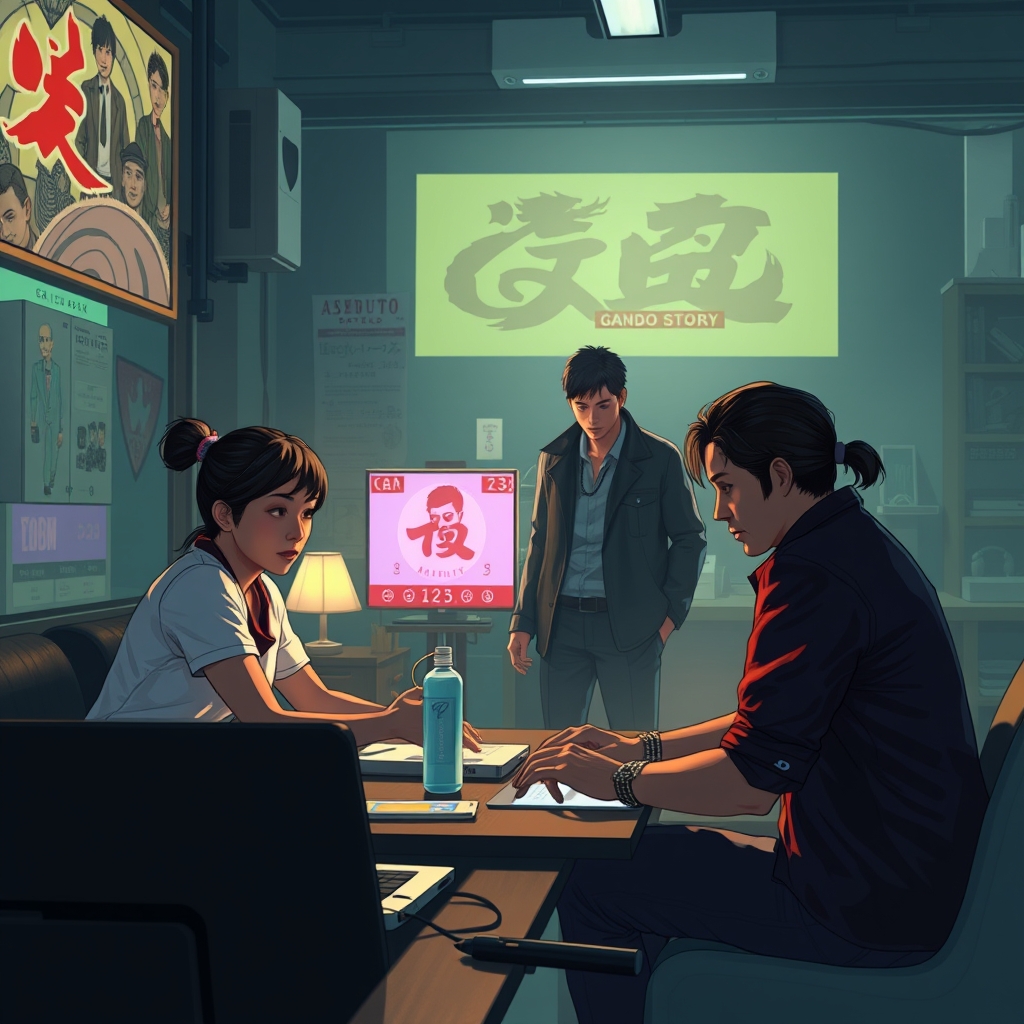
Yakuza Creator’s Gang of Dragon PS5 Game and New Studio Dead
Yakuza Creator’s Gang of Dragon PS5 Game and New Studio Officially Dead
The video game industry is a place of high risks, massive budgets, and sudden changes. Fans of crime dramas and Japanese action games recently received some heartbreaking news. Toshihiro Nagoshi, the legendary creator behind the beloved Yakuza series, has seen his ambitious new studio and its flagship project come to a complete halt. Gang of Dragon, the anticipated PlayStation 5 game that many hoped would define a new era for the developer, is officially dead.
For longtime fans of Nagoshi, this news feels like the end of an era. Known for his unique storytelling, eccentric characters, and stylish action, Nagoshi left Sega a few years ago to start fresh with backing from NetEase. The gaming community watched with bated breath as he built a new team, promising a brand-new experience that would push hardware to its limits. Unfortunately, the grand vision has crumbled before reaching store shelves. In this article, we will explore what happened, the rise and fall of Nagoshi’s new studio, the fate of Gang of Dragon, and what the future holds for one of gaming’s most celebrated creators.
The Rise of Nagoshi Studio: A Fresh Start
To understand the current situation, we need to look back at the formation of Nagoshi Studio. Toshihiro Nagoshi spent decades at Sega, where he shaped the company’s identity. He worked on classic arcade titles like Daytona USA and Super Monkey Ball before creating the monumental Yakuza franchise, which later became known as Like a Dragon. Under his guidance, the series grew from a niche Japanese title into a global phenomenon.
In late 2021, Nagoshi made the shocking decision to leave Sega. He took several key developers with him to establish Nagoshi Studio, a subsidiary funded by the Chinese tech giant NetEase. This partnership provided the financial freedom and resources needed to create a high-end console game without the corporate constraints of his previous employer. The industry buzzed with excitement. Players and critics alike wondered what Nagoshi could achieve with unlimited creative control and massive backing.
The studio promised a game that would combine cinematic storytelling with intense action, staying true to Nagoshi’s signature style. However, game development is notoriously difficult. Building a new studio from the ground up requires hiring hundreds of skilled developers, establishing new pipelines, and creating proprietary technology or mastering existing engines. While the team was hard at work, internal pressures and shifting market dynamics began to take a toll behind closed doors.
What Was Gang of Dragon?
Details about Gang of Dragon were always scarce, which only added to the mystery and hype. From the brief teasers and corporate announcements shared by NetEase and Nagoshi Studio, we knew the game was targeting powerful hardware like the PlayStation 5 and high-end personal computers.
Insiders suggested that Gang of Dragon would lean heavily into the themes that Nagoshi mastered over his career. It was expected to feature a mature narrative involving crime, loyalty, and betrayal, likely set in a detailed, vibrant urban environment. Unlike the turn-based combat of recent Like a Dragon titles, Gang of Dragon was rumored to feature visceral, real-time action combat that showcased modern graphic fidelity.
Fans envisioned exploring a fictional city filled with nightlife, complex characters, and dramatic cutscenes that rivaled Hollywood movies. The game was positioned as a major AAA release that would rival Sega’s own output and establish NetEase as a serious player in the single-player console market. Unfortunately, these grand ambitions remained on the drawing board.
The Signs of Trouble
In the fast-paced world of video games, silence is rarely a good sign. As months turned into years, Nagoshi Studio remained relatively quiet about Gang of Dragon. While other studios flooded social media with trailers, gameplay deep dives, and developer diaries, Nagoshi’s team offered very little in terms of tangible updates.
Behind the scenes, the global gaming landscape was shifting dramatically. Economic pressures, rising development costs, and a wave of industry layoffs made publishers much more cautious. NetEase, like many other large technology companies, began reevaluating its investments in high-risk console game development. Funding that once flowed freely into new single-player studios began to dry up or come with much stricter performance milestones.
Reports began to surface that Nagoshi Studio was struggling to align its creative vision with the financial realities of modern game development. Creating a top-tier PlayStation 5 game requires hundreds of millions of dollars and a massive workforce. When creative disagreements meet financial tightening, projects often suffer. Sadly, in this case, the entire project was deemed too risky to continue.
The Official Cancellation and Studio Closure
The announcement that Gang of Dragon and Nagoshi Studio were officially dead sent shockwaves through the gaming community. NetEase confirmed the closure, citing strategic shifts in their global gaming investments. With the parent company pulling its financial support, Nagoshi Studio could no longer sustain its operations.
For the developers who left stable jobs at Sega to follow Nagoshi into this new venture, the closure is a bitter pill to swallow. Many talented artists, programmers, and writers now find themselves looking for work in a difficult job market. The gaming industry has seen numerous studio closures over the last two years, but losing a studio led by a veteran of Nagoshi’s caliber feels particularly devastating.
The cancellation of Gang of Dragon means players will never experience the world, characters, and gameplay mechanics that the team spent years designing. It serves as another reminder that creative talent and financial backing alone are not enough to guarantee a game makes it to the finish line.
Impact on the Gaming Industry
The demise of Nagoshi Studio and Gang of Dragon highlights a larger trend currently affecting the video game industry. Over the past few years, major tech companies from China and North America invested heavily in western and Japanese development talent, hoping to capture a share of the lucrative console market.
However, the economic climate has changed. Publishers are now demanding faster returns on investment and lower financial risks. Single-player narrative games, while beloved by fans, take years to build and carry enormous budgets. When a project faces delays or budget overruns, investors are increasingly willing to pull the plug rather than pour more money into an uncertain future.
This situation also raises questions about the future of independent AAA studios funded by massive tech conglomerates. While companies like NetEase and Tencent provide a great alternative to traditional publishers, they are ultimately driven by profit margins. When market conditions tighten, artistic ventures are often the first casualties.
Fan Reaction and Community Response
Social media platforms and gaming forums erupted with sadness and frustration following the news. Fans of the Yakuza series expressed deep sympathy for Toshihiro Nagoshi. Many took to platforms like X and Reddit to share their favorite memories of his past work and voice their disappointment over the lost potential of Gang of Dragon.
Some fans expressed anger toward the modern industry structure, pointing out that corporate decisions often ruin creative visions. Others focused on the human element, wishing the developers well and hoping they find new homes in the industry soon. Despite the sadness, the community’s respect for Nagoshi remains intact. His legacy is secure, even if his latest project was not meant to be.
What is Next for Toshihiro Nagoshi?
The biggest question on everyone’s mind is what Toshihiro Nagoshi will do next. At this stage in his career, Nagoshi is an industry icon. He has nothing left to prove, having already created one of the most successful and enduring franchises in video game history.
While some veterans might choose to retire after a major setback like this, Nagoshi has always been passionate about making games. Whether he decides to take a well-deserved break, join an established publisher as a consultant, or attempt to start another independent venture remains to be seen. Given his reputation and connections, many companies would welcome his creative insight with open arms.
It is also worth noting that the Like a Dragon franchise he left behind at Sega is thriving. Under the leadership of Ryu Ga Gotoku Studio, the series continues to release hit after hit, proving that the foundation Nagoshi built is strong enough to stand on its own. While we may never see Gang of Dragon, the DNA of Nagoshi’s design philosophy lives on in modern crime dramas.
Conclusion
The cancellation of Gang of Dragon and the official closure of Nagoshi Studio is a tragic loss for the gaming world. It demonstrates that even industry legends are not immune to the harsh financial realities and shifting priorities of modern game publishing. Fans who eagerly anticipated a brand-new masterpiece from Toshihiro Nagoshi must now accept that this vision will remain unfulfilled.
However, the legacy of Nagoshi remains untarnished. His contributions to gaming through Sega and the Yakuza series will be celebrated for decades to come. As the dust settles on this unfortunate chapter, the gaming community can only hope that Toshihiro Nagoshi finds a new creative outlet and continues to inspire future generations of developers. For now, Gang of Dragon joins the long list of fascinating projects that never were, leaving fans to wonder what could have been.



news via inbox
Nulla turp dis cursus. Integer liberos euismod pretium faucibua