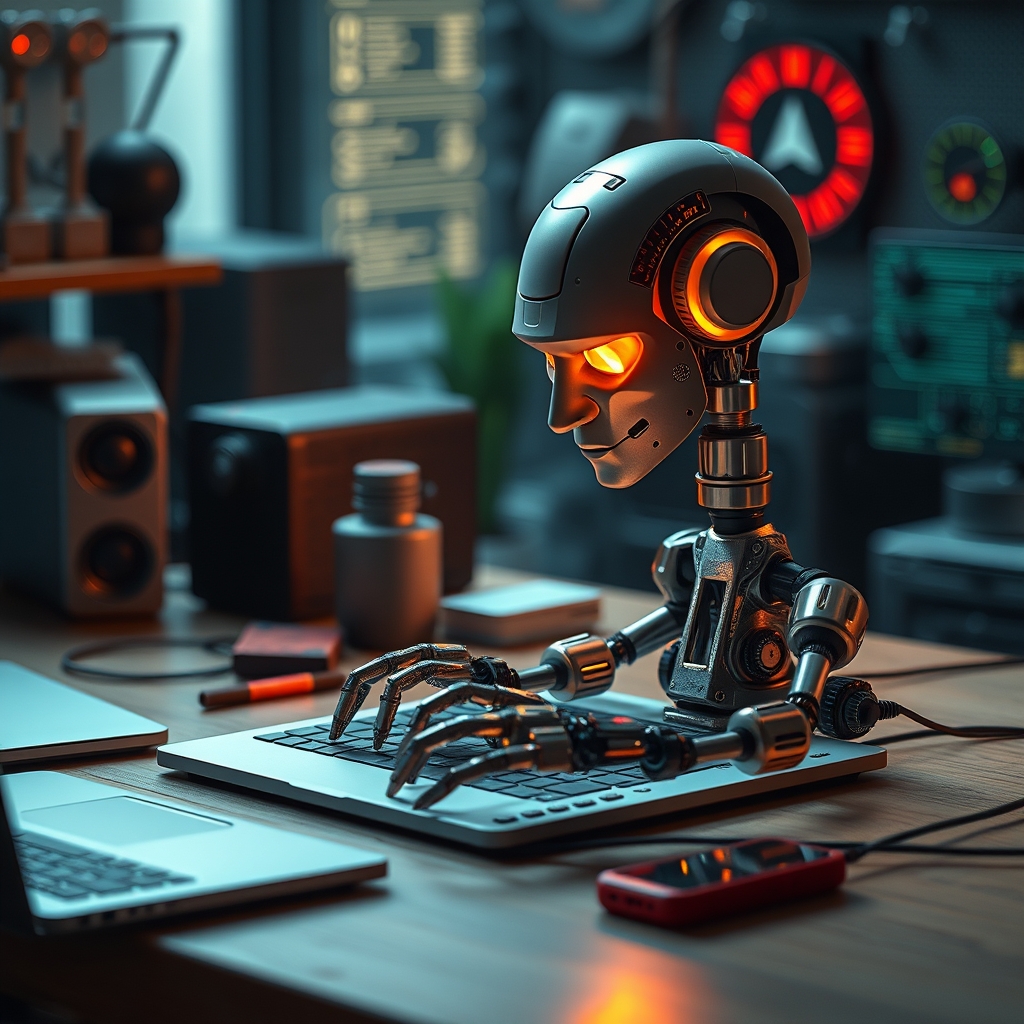
Capcom RE Engine AI Transformation: The Future of…
Capcom RE Engine AI Transformation: The Future of Collaborative Game Development
The gaming industry stands on the precipice of a monumental shift. For decades, video games have been crafted through meticulous, painstaking human effort—thousands of lines of code written by hand, individual polygons sculpted by digital artists, and countless hours of playtesting to ensure every mechanic feels just right. While human creativity will always remain the heartbeat of interactive entertainment, the tools we use to bring these virtual worlds to life are evolving at a breathtaking pace.
Recently, a monumental announcement sent ripples through the gaming world. Capcom, the legendary Japanese publisher behind powerhouse franchises like Resident Evil, Monster Hunter, and Street Fighter, revealed its bold vision for the future. The company announced plans to transform its proprietary RE Engine into an AI-generation game engine. The core philosophy driving this initiative is simple yet profound: stepping into a future where we create games together with artificial intelligence.
At TechRook, we closely monitor the intersection of cutting-edge technology and entertainment. This development is not merely an incremental update; it represents a fundamental redefinition of how games are conceptualized, built, and experienced. Let us dive deep into what Capcom’s announcement means, how the RE Engine will change, and what this collaborative human-AI future holds for gamers and developers alike.
Understanding the Powerhouse: What is the RE Engine?
Before exploring Capcom’s artificial intelligence ambitions, we must first appreciate the foundation upon which they are building. The RE Engine (Reach Engine) was originally developed for Resident Evil 7: Biohazard, which launched in 2017. Capcom created the engine to replace their older MT Framework, specifically tailored to meet the demands of modern high-definition gaming while remaining flexible across various hardware platforms.
Over the years, the RE Engine has proven to be one of the most versatile and efficient game development environments in the industry. It powered critical and commercial hits such as:
- Resident Evil 2, 3, and 4 Remakes
- Resident Evil Village
- Devil May Cry 5
- Monster Hunter Rise
- Exoprimal
Developers frequently praise the RE Engine for its stellar performance, stunning visual fidelity, rapid loading times, and intuitive workflow. Because Capcom built the engine in-house, they tailored it precisely to their development pipelines. Now, by injecting advanced artificial intelligence directly into the architecture of the RE Engine, Capcom is positioning itself at the absolute forefront of industry innovation.
The Vision: Creating Games Together with AI
When people hear about artificial intelligence in game development, fear and misunderstanding often follow. Headlines frequently scream about algorithms replacing artists, writers, and programmers entirely. However, Capcom’s stated vision paints a very different, much more inspiring picture: collaboration rather than replacement.
The phrase “A Future Where We Create Games Together With AI” emphasizes symbiosis. Artificial intelligence is not designed to sit in a room by itself and churn out a finished blockbuster video game. Instead, it acts as an ultra-powerful co-pilot, an assistant capable of handling tedious repetitive tasks, expanding creative horizons, and accelerating the production pipeline.
Imagine a senior environment artist conceptualizing a sprawling fantasy forest. Traditionally, placing every single tree, rock, blade of grass, and lighting fixture requires immense manual labor. With an AI-integrated RE Engine, the artist can guide the system using natural language prompts or rough sketches to generate baseline assets instantly. The human creator then curates, refines, and injects soul into the generated work. This partnership allows developers to focus on what humans do best: emotional storytelling, innovative game design, and artistic direction.
How Transforming the RE Engine Works
Transitioning a traditional game engine into an AI-generation powerhouse requires a complete rethinking of software architecture. Capcom’s initiative involves integrating machine learning models directly into the core tools that designers, animators, and programmers use every day.
Let us break down the key pillars of how this transformation is expected to impact the development lifecycle:
1. Accelerated Asset Generation
Creating high-resolution 3D models, textures, and audio cues takes an immense amount of time. An AI-powered RE Engine can analyze Capcom’s vast library of past assets and generate new, context-aware objects in seconds. If a developer needs a specific weathered wooden crate for a zombie-infested warehouse, the system can produce dozens of high-fidelity variations that match the exact visual style of the game.
2. Smarter Animation and Rigging
Character animation is notoriously difficult. Rigging a 3D model with bones and ensuring realistic movement requires skilled technical artists. Machine learning algorithms integrated into the engine can automatically predict and generate fluid skeletal movements, facial expressions, and physics interactions, drastically reducing the time needed to bring characters to life.
3. Procedural World Building and Level Design
While procedural generation has existed for years, early implementations often felt sterile and repetitive. Modern generative AI understands context, mood, and architectural logic. Capcom can leverage the RE Engine to draft massive, intricate game maps that maintain a handcrafted feel, allowing developers to populate worlds with rich details much faster than ever before.
4. Enhanced QA and Bug Detection
Quality assurance (QA) testing is essential but grueling. AI agents trained on game mechanics can play through builds millions of times, identifying obscure bugs, collision errors, and balance issues long before human testers encounter them. This leads to more stable game launches and less crunch time for development teams.
The Industry Context: Why Capcom is Making This Move
Capcom’s announcement does not happen in a vacuum. The global gaming industry is facing a unique set of challenges. Game development budgets have skyrocketed, with modern AAA titles routinely costing hundreds of millions of dollars to produce. Development cycles have stretched from three years to six or even seven years per project.
At the same time, player expectations are higher than ever. Gamers demand photorealistic graphics, expansive open worlds, complex narrative branching, and flawless performance across PC and multiple console generations. Meeting these demands using traditional, purely manual development methods is becoming financially and operationally unsustainable.
By transforming the RE Engine, Capcom is future-proofing its operations. Efficiency is no longer just a luxury; it is a necessity. Companies that successfully integrate artificial intelligence into their workflows will reduce development costs, shorten production cycles, and maintain high creative output without burning out their human workforce.
Balancing Innovation with Human Creativity
Whenever artificial intelligence enters a creative field, valid concerns arise regarding job security, originality, and the loss of the human touch. Capcom is acutely aware of these sensitivities. Building a successful AI-generation engine requires a delicate ethical balance.
First and foremost, Capcom owns a massive repository of proprietary art, code, and game data. Unlike external AI models trained on scraped internet data of questionable origin, Capcom’s AI models will likely be trained safely on their own internal assets and licensed materials. This protects copyright integrity and ensures the generated content honors the distinct visual and mechanical identity of Capcom’s intellectual properties.
Furthermore, artificial intelligence lacks genuine lived experience—the core ingredient of great art. An algorithm can calculate the physics of a jump scare or render a hyper-realistic drop of rain, but it cannot feel fear, grief, joy, or triumph. Human writers, directors, and designers provide the emotional core, the thematic resonance, and the unexpected flashes of brilliance that make a game truly memorable. AI simply clears away the bureaucratic and technical roadblocks, allowing human creators to paint with a broader brush.
What This Means for Future Capcom Games
As Capcom gradually rolls out these AI-generation capabilities within the RE Engine, what can fans expect from upcoming releases? While blockbuster franchises like Resident Evil and Monster Hunter will still require years of careful planning, the scope and scale of these experiences are bound to expand dramatically.
We might see:
- Denser, more interactive environments: Worlds where nearly every object can be manipulated, destroyed, or interacted with dynamically.
- Bigger scope without longer waits: Shorter gaps between major franchise releases while maintaining or exceeding current quality standards.
- Smarter non-player characters (NPCs): Advanced AI integration could trickle down into gameplay, creating enemies and companions that adapt to player strategies in real-time, making every playthrough unique.
To put things into perspective, let us look at a quick comparison between traditional game development workflows and the emerging AI-assisted RE Engine workflow:
| Development Phase | Traditional Workflow | AI-Assisted RE Engine Workflow |
|---|---|---|
| Concept Art & Prototyping | Manual sketching and blockouts taking weeks. | Rapid ideation and generation of baseline concepts in hours. |
| Asset Creation | Individual modeling, texturing, and optimization by hand. | Contextual generation with human curation and refinement. |
| Testing & Debugging | Primarily human testers finding visible bugs. | Continuous AI automated testing combined with human intuition. |
| Production Timeline | Extensive cycles lasting 5 to 7 years. | Streamlined timelines with reduced crunch and faster iteration. |
The Global Ripple Effect on the Gaming Industry
Capcom is not the only publisher investing in artificial intelligence, but their public commitment to transforming a core game engine is a defining milestone. Other industry giants, such as Electronic Arts, Ubisoft, and Epic Games, are also heavily researching generative tools. However, Capcom’s reputation for disciplined engineering and consistent quality gives this announcement immense weight.
When a heavyweight like Capcom successfully integrates AI into the RE Engine, it sets a new industry standard. Independent developers and mid-sized studios will look at these advancements and demand similar capabilities in engines like Unreal Engine and Unity. Ultimately, this democratization of high-end development tools could empower smaller teams to create games that previously required the resources of a massive corporation.
Looking Ahead: The Dawn of a New Era
The announcement from Capcom is a thrilling glimpse into tomorrow. By framing artificial intelligence as a partner rather than a replacement, they are charting a healthy, sustainable course for the future of interactive entertainment. The RE Engine, already celebrated as a masterpiece of modern software engineering, is evolving into something far greater—a collaborative canvas where human imagination and machine intelligence merge.
As players, we stand to benefit the most. The games of the coming decade promise to be more visually stunning, emotionally resonant, immersive, and expansive than anything we have experienced before. The partnership between human creators and artificial intelligence is no longer science fiction; it is happening right now, and Capcom is leading the charge.
What are your thoughts on Capcom’s plan to transform the RE Engine into an AI-generation tool? Are you excited about the possibilities of human-AI collaboration in game development, or do you have reservations? Let us know your thoughts, and stay tuned to TechRook for continuous updates as this exciting story unfolds!



news via inbox
Nulla turp dis cursus. Integer liberos euismod pretium faucibua