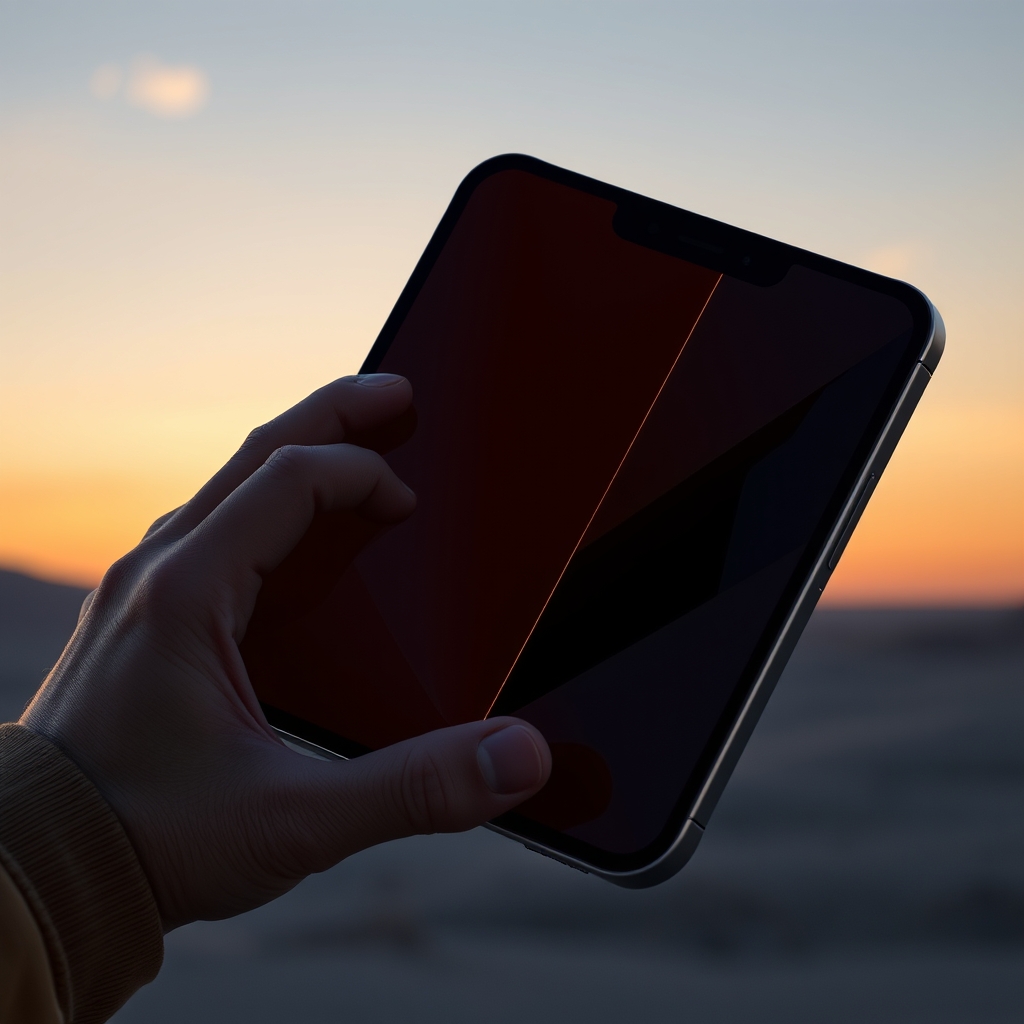
Apple Exec Says ‘Hold Us Accountable’ on iPhone Duo Crease: What It Means for the Future of Foldables
Welcome back to TechRook, your trusted destination for deep dives into the fast-paced world of technology. If you have been keeping an eye on the rumor mill lately, you know that Apple is rarely out of the headlines for long. Recently, discussions surrounding a potential foldable Apple device—often dubbed by enthusiasts and analysts as the “iPhone Duo”—have reached a fever pitch. But what happens when an Apple executive steps up to the plate and tells the tech community to “hold us account” regarding one of the most persistent hardware challenges in the foldable market: the screen crease?
(adsbygoogle = window.adsbygoogle || []).push({});
In this comprehensive article, we are going to break down what this statement means, why the crease is such a massive hurdle for manufacturers, and what you can realistically expect from Apple’s eventual entry into the foldable smartphone space. Grab a cup of coffee, settle in, and let us explore the details.
The Foldable Landscape: Why the Crease Matters
Before we dive into Apple’s specific comments, it is important to understand why the screen crease has become the ultimate benchmark for foldable mobile devices. Over the past few years, companies like Samsung, Google, and OnePlus have released incredible foldable phones. Devices like the Galaxy Z Fold series have evolved significantly, becoming thinner, lighter, and more durable with every generation.
However, physics remains an undefeated opponent in many ways. When you bend a flexible OLED display in half, the material undergoes mechanical stress. Over time, this stress creates a visible and tactile indentation right down the middle of the screen where the hinge mechanism operates. While some users quickly adapt to it, others find it distracting, especially when viewing media, scrolling through documents, or drawing with a stylus.
For Apple, a company legendary for its uncompromising industrial design and obsession with seamless aesthetics, a prominent crease is simply a non-starter. Apple does not usually rush to be the first to market with a brand-new form factor. Instead, the Cupertino giant prefers to observe, iterate, and launch a product only when it can solve the inherent compromises that plagued early iterations from competitors.
When reports surfaced highlighting executive commentary on holding Apple accountable for getting this right, it sent a clear message: Apple knows that if and when they enter the foldable market, the device will be scrutinized under a microscopic lens. They cannot afford a subpar display.
Decoding the “Hold Us Accountable” Philosophy
When a high-ranking executive invites consumers and industry watchers to hold a company accountable, it is a calculated and confident move. It signals internal morale and high standards, but it also places a massive target on the product development team’s back.
Let us look at what this philosophy truly represents in the context of Apple’s engineering culture:
- Perfectionism over Punctuality: Apple has never been afraid to take its time. While competitors rushed foldable phones to market as early as 2019, Apple spent years researching materials, hinge designs, and glass durability behind closed doors.
- User-Centric Expectations: By telling the public to hold them accountable, leadership is acknowledging that expectations for an Apple foldable are stratospheric. Users will not accept a cheap-feeling hinge or a distracting valley in the middle of their screen.
- Confidence in R&D: This kind of statement usually stems from breakthrough developments in laboratories. It suggests that Apple’s materials science teams have made significant strides in minimizing or entirely eliminating the dreaded crease.
Of course, talk is cheap in the tech world. Consumers have been burned by overhyped marketing campaigns from various brands for decades. That is why this particular challenge—holding them accountable—is so refreshing, yet demanding.
What Do We Know About the Rumored iPhone Duo?
While Apple has not officially announced a foldable iPhone or iPad hybrid under the name “iPhone Duo,” supply chain leaks, patent filings, and analyst reports from sources like MacRumors have given us a pretty clear picture of what is cooking in Cupertino.
Industry insiders suggest that Apple is working on multiple foldable form factors. One is a traditional book-style foldable device that unfolds into a tablet-sized display, while another might be a more compact clamshell design akin to the Z Flip. However, the device generating the most excitement is a hybrid concept that could bridge the gap between an iPhone and an iPad.
Key Hardware Hurdles Apple Must Clear
To successfully launch a foldable device that lives up to the hype, Apple must overcome several massive engineering roadblocks:
(adsbygoogle = window.adsbygoogle || []).push({});
| Challenge | Current Industry Standard | The Apple Expectation |
|---|---|---|
| Screen Crease | Visible and tactile indentation along the hinge. | Virtually invisible and imperceptible to the touch. |
| Hinge Durability | Rated for 200,000 to 500,000 folds with mechanical wear over time. | Multi-year reliability with seamless closing and zero gap. |
| Display Protection | Softer ultra-thin glass (UTG) prone to scratches or denting from fingernails. | Enhanced scratch resistance matching traditional Ceramic Shield displays. |
As you can see from the table above, the bar is set exceptionally high. If Apple delivers a device with a noticeable crease, critics will pounce. If they wait too long, analysts will claim they missed the boat. It is a delicate tightrope walk for the world’s most valuable technology company.
The Role of Materials Science and Innovative Engineering
How does a company go about erasing a crease? The answer lies in advanced materials science. Traditional hinges pull the display tight when closed, which creates high tension points. Newer hinge designs incorporate water-drop or teardrop-shaped mechanisms that allow the flexible screen to curve gently rather than fold sharply in half.
Furthermore, Apple’s patent portfolio reveals a heavy focus on local heating techniques, self-healing coatings, and multi-layered polymer structures designed to absorb impact without deforming permanently. When an executive says “hold us accountable,” they are essentially betting millions of dollars on these proprietary manufacturing techniques paying off.
At TechRook, we believe that the real breakthrough will not just be the hinge, but the glass itself. Apple has spent decades perfecting glass chemistry through partnerships with companies like Corning. Applying that expertise to a bendable substrate is perhaps the most difficult challenge in modern consumer electronics.
How Competitors Are Responding
It is worth noting that Apple does not exist in a vacuum. Samsung, Honor, Motorola, and Huawei are constantly pushing the envelope. Honor, in particular, has made massive strides in creating razor-thin foldables with remarkably shallow creases, proving that consumers do not necessarily have to live with a massive groove in their display.
However, none of these competitors command the same ecosystem loyalty as Apple. When an iPhone user upgrades, they are buying into iOS, iCloud, Apple Watch integration, and a seamless developer ecosystem. When Apple finally introduces a foldable device, it will instantly legitimize the form factor for millions of mainstream consumers who have been hesitant to switch to Android just to try a foldable.
This is precisely why the stakes are so high. A misstep by Apple could slow down foldable adoption overall, while a triumph could completely redefine what we expect from our everyday carry devices.
What Should Consumers and Fans Do Now?
If you are eagerly waiting for the arrival of the iPhone Duo or whatever Apple decides to call its foldable masterpiece, patience is your best virtue. Rumors suggest we might see a foldable iPad or hybrid device before a dedicated foldable iPhone hits the market, allowing Apple to test the waters on a smaller commercial scale.
When the device finally arrives, take the executive up on their challenge. Inspect the display, test the hinge, evaluate the battery life, and hold Apple accountable to the high standards they have set for themselves. Technology journalism thrives on healthy skepticism, and consumers benefit the most when companies are pushed to innovate rather than rest on their laurels.
(adsbygoogle = window.adsbygoogle || []).push({});
Conclusion
The conversation sparked by Apple’s executive comments regarding the foldable screen crease highlights a fascinating moment in tech history. We are watching a giant prepare to enter a mature market, fully aware that simply participating is not enough. They have to lead, innovate, and conquer the physical limitations that have frustrated users for years.
Thank you for reading this deep dive on TechRook. Do you think Apple can truly eliminate the crease, or are physical limitations bound to win? Will you buy a foldable iPhone on day one, or are you waiting to see how the first generation holds up? Let us know your thoughts, stay tuned to our blog for future updates, and keep holding the tech world accountable!




news via inbox
Nulla turp dis cursus. Integer liberos euismod pretium faucibua