
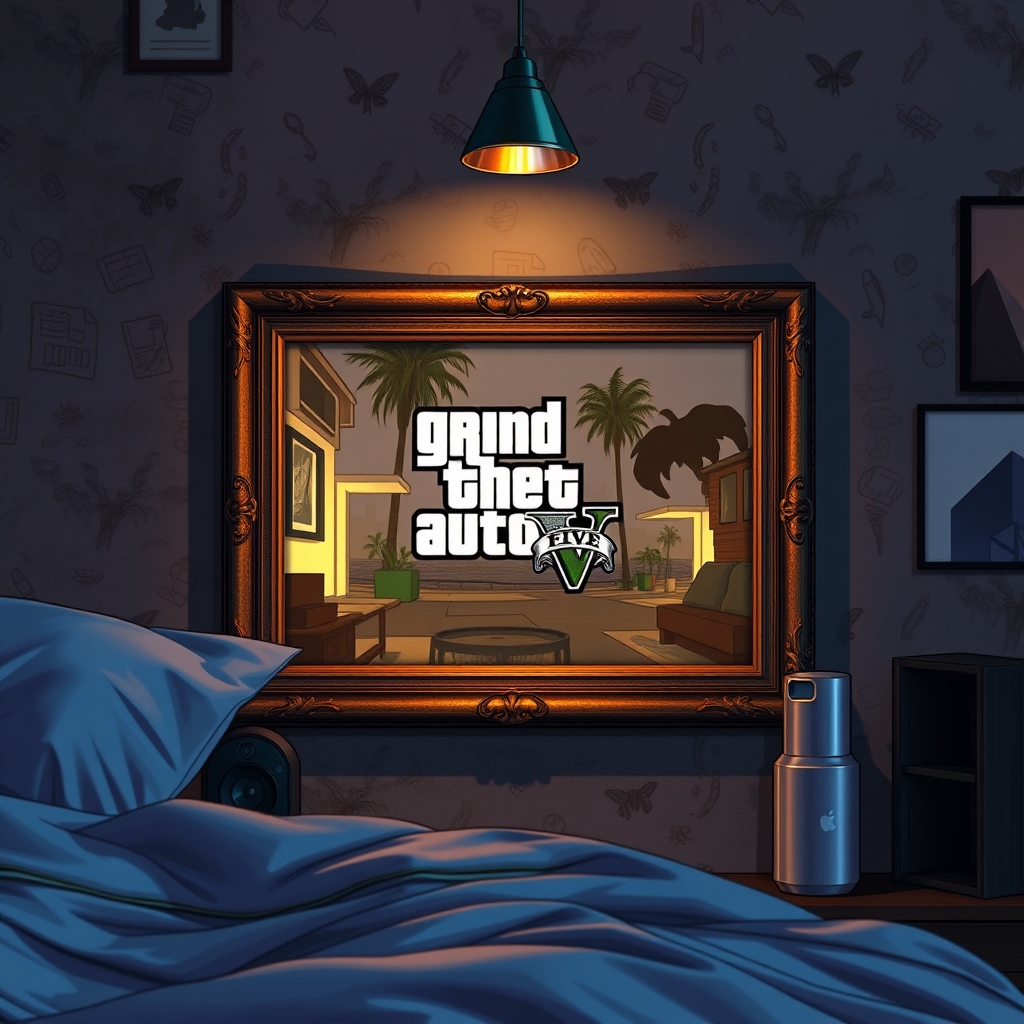
GTA 6 Teaser Was Hidden in GTA San Andreas Remastered All Along
The Grand Theft Auto fan community is famous for its unmatched detective work. Over the past two decades, players have combed through millions of lines of code, analyzed thousands of audio files, and studied every single pixel inside Rockstar Games releases. When players are waiting for a new entry in their favorite open-world franchise, no stone remains unturned. Yet, even with that intense scrutiny, sometimes the biggest secrets hide in plain sight.
Back in November 2021, Rockstar Games released Grand Theft Auto: The Trilogy – The Definitive Edition. The launch was notoriously chaotic, plagued by performance hiccups, awkward character models, and unexpected visual bugs. While the community spent most of its early days cataloging technical issues, a small group of eagle-eyed sleuths noticed something extraordinary tucked away inside a remote bar in the desert of San Andreas. It was a framed photograph showing a sunny, suburban home surrounded by palm trees. The lighting, textures, and asset quality looked noticeably different from anything seen in the remastered trilogy or even Grand Theft Auto V.
At the time, theorists claimed this single picture was our very first official look at Grand Theft Auto VI. Skeptics laughed it off as a generic stock photo or a leftover test asset. Today, as reported by Kotaku and confirmed through subsequent official trailers and verified leaks, those early theorists were entirely correct. Rockstar Games had slipped an authentic teaser for the sun-drenched state of Leonida into the remastered version of San Andreas, years before the world received an official trailer.
The Discovery at the Lil Probe Inn
To understand how this mystery started, we have to travel back to the rural sands of Bone County in Grand Theft Auto: San Andreas. Just down the road from Area 69 sits the Lil Probe Inn, an iconic roadside diner and bar themed around real-world UFO lore and Area 51 conspiracies. In both the 2004 original and the 2021 remaster, the interior walls of this quirky tavern are covered with framed photographs of unidentified flying objects and mysterious phenomena.
When Grove Street Games developed the Definitive Edition, they rebuilt the environment textures to support higher resolutions. While walking through the virtual tavern, players noticed that most of the framed images on the wall were familiar screenshots taken directly from Grand Theft Auto V. You could easily spot recognizable locations like the Los Santos Observatory, Mount Chiliad, and the rolling Vinewood hills. These images fit right into Rockstar’s tradition of cross-referencing their own games.
However, one picture stood out like a sore thumb. Hung alongside the Los Santos snapshots was a picture of a single-story, pastel-colored house. The front yard featured a neat driveway, lush green grass, tropical shrubbery, and tall palm trees swaying against a bright blue sky filled with realistic, volumetric clouds. What truly shocked investigators was not just the tropical setting, but the sheer technological fidelity of the image.
- The foliage displayed complex ray-traced shadows that did not match GTA V’s rendering engine.
- The volumetric cloud formations matched the advanced skybox systems developed for Red Dead Redemption 2.
- The architecture closely mirrored residential homes commonly found in suburban South Florida, rather than the West Coast styles of Southern California.
- A subtle, blurry UFO hovered in the sky above the roof, keeping with the bar’s theme while masking what looked like a genuine in-engine screenshot.
The Initial Skepticism and the Great Debate
When the image was first posted on GTA Forums and Reddit in late 2021, the community immediately split into two opposing camps. Hopeful fans argued that the tropical aesthetic clearly pointed toward Vice City, which had long been rumored as the primary setting for Grand Theft Auto VI. Given Rockstar’s legendary habit of placing clever hints in previous titles, many believed this was an intentional, quiet breadcrumb left behind for the most dedicated explorers.
On the other side of the debate sat the skeptics, and their arguments seemed just as convincing at the time. Critics pointed out that Grand Theft Auto: The Trilogy – The Definitive Edition was not developed internally by Rockstar North. Instead, it was handled by Grove Street Games, an external studio that had previously ported classic titles to mobile platforms. Skeptics wondered why Rockstar would entrust top-secret, highly confidential assets from their most valuable upcoming project to an outside partner.
Furthermore, some community members suggested that the photograph might simply be an upscale of a royalty-free stock image, or an unused digital asset purchased from an online 3D store. Internet sleuths spent weeks running reverse image searches across Google, Bing, and major stock photography archives like Getty Images and Shutterstock. They could not find a single match. Every search led right back to the Lil Probe Inn texture file.
Tracking Down the Real-World Florida Inspiration
When reverse image searches failed, dedicated fans took their investigation into the physical world. Armed with architectural knowledge and satellite mapping software, players began searching neighborhoods across Southern and Central Florida, including Miami, Fort Lauderdale, Tampa, and Boca Raton. They were searching for the real-life structure that inspired the digital house.
Eventually, researchers narrowed down the building’s distinct features. The house possessed a specific style of Floridian roofing, an arched garage entryway, and exterior stucco finishes that are typical of suburban developments built across Palm Beach and Broward counties during the late twentieth century. Even the species of palm trees rendered in the front yard matched the native flora of South Florida.
The evidence began mounting quickly:
- The architecture was unmistakably Floridian, not Californian.
- The lighting model utilized Rockstar’s updated proprietary RAGE engine, identical to the visual improvements pioneered in Red Dead Redemption 2.
- The asset did not appear anywhere else in any existing Rockstar title.
Despite these compelling findings, a large portion of the broader gaming public remained unconvinced. Without an official word from Rockstar, the mystery remained an unverified conspiracy, filed away in the massive cabinet of GTA lore.
The 2022 Leaks and the 2023 Trailer Confirmation
The turning point for the mystery came in two dramatic waves. The first wave occurred in September 2022, when an unprecedented security breach resulted in dozens of early development videos of Grand Theft Auto VI leaking online. Although the leaked footage showed an unfinished game with placeholder assets and debugging menus, it definitively confirmed that the upcoming title was set in Vice City and its surrounding state, known as Leonida.
More importantly, the leaked clips showcased suburban areas that looked strikingly similar to the Lil Probe Inn photograph. The lighting calculations, the density of the roadside palm trees, and the specific pastel color palettes of the residential buildings lined up perfectly with the solitary picture framed on the wall of that desert bar.
The definitive proof arrived in December 2023, when Rockstar Games finally released the record-breaking first official trailer for Grand Theft Auto VI. The trailer offered sweeping views of Vice City, the Florida Keys equivalent, and sprawling residential neighborhoods. The volumetric clouds, the realistic sun flare, and the intricate foliage physics seen in the trailer matched the exact visual signature of the Lil Probe Inn picture from two years earlier.
Kotaku and several prominent digital analysts revisited the 2021 screenshot, comparing its assets side-by-side with the trailer footage. The verdict was unanimous. The framed house was not a random asset, an architectural stock image, or an accident. It was an authentic, in-engine capture of Grand Theft Auto VI running on Rockstar’s updated engine, slipped right under the noses of players in 2021.
Rockstar’s Rich History of Sneaky Teasers
Looking back, the surprise is not that Rockstar included a teaser for GTA 6 in the San Andreas remaster. The surprise is that so many people doubted it in the first place. Throughout its history, Rockstar Games has frequently used earlier titles and remasters to leave subtle clues about upcoming projects. The studio delights in rewarding players who pay close attention to environmental details.
| Game Release | Hidden In-Game Teaser | Upcoming Project Revealed |
|---|---|---|
| Grand Theft Auto III (2001) | Flight billboard reading “See you in Miami” | Grand Theft Auto: Vice City (2002) |
| Grand Theft Auto: Vice City (2002) | Airline posters promoting flights to San Andreas | Grand Theft Auto: San Andreas (2004) |
| Grand Theft Auto IV (2008) | In-game theater and TV ads referencing Los Santos | Grand Theft Auto V (2013) |
| GTA San Andreas Definitive Edition (2021) | Framed Florida house photograph at Lil Probe Inn | Grand Theft Auto VI (2025) |
When Grand Theft Auto III launched in October 2001, nobody knew what the next game would be. Yet, right near Francis International Airport in Liberty City, a prominent billboard featured a tropical airplane advert declaring that Miami was waiting for you. One year later, Grand Theft Auto: Vice City hit store shelves, confirming that the billboard was an intentional preview.
Similarly, within Grand Theft Auto IV and its episodic expansions, airline advertisements scattered around Liberty City frequently promoted trips to San Santos and the state of San Andreas. Rockstar has always treated its virtual worlds as an interconnected tapestry, where future locations are quietly referenced long before marketing campaigns officially begin.
How Did the Asset End Up in the Remaster?
The lingering question for many gaming enthusiasts is how this specific asset made its way into Grand Theft Auto: The Trilogy – The Definitive Edition. Because the remasters were developed by Grove Street Games using Unreal Engine 4 as a translation layer over the original renderware code, how did an internal RAGE engine screenshot from GTA 6 get handed over?
There are two primary theories that explain this occurrence:
Theory 1: The Deliberate Plant
The first theory suggests that Rockstar North intentionally provided Grove Street Games with a folder of high-resolution environmental screenshots to decorate the Lil Probe Inn. In the original 2004 game, the diner’s walls were filled with low-resolution photographs of real-life paranormal sightings and historical UFO pictures. To modernize the space, Grove Street Games needed replacement textures.
Rockstar management may have deliberately slipped a brand-new test screenshot from the ongoing GTA 6 development build into that asset package. They knew that fans would eventually scrutinize every inch of the bar. It served as a covert celebration of the company’s future, designed specifically to start quiet word-of-mouth conversations without committing to a full public reveal.
Theory 2: The Innocent Asset Mix-Up
The second theory is far more mundane, yet just as plausible in game development. During the production of the Definitive Edition, artists at Grove Street Games needed modern in-game photographs to display inside frames and on television screens. They were likely granted access to an internal Rockstar repository of screenshots, including environmental captures taken from Grand Theft Auto V, Red Dead Redemption 2, and ongoing internal tech demonstrations.
An environment artist looking for sunny, domestic pictures to match the UFO theme might have grabbed the suburban Florida house without realizing it came from an unannounced, top-secret project. They edited a tiny, out-of-focus UFO into the sky, saved the texture, and placed it on the bar’s wall. Because the image was small, slightly blurry, and tucked away in a desert diner, quality assurance testers simply saw a quirky decoration and approved the build.
Regardless of whether the inclusion was an act of deliberate marketing genius or an accidental slip-up during development, the outcome was the same. The Definitive Edition became the unexpected host for the earliest visual look at Vice City’s modern iteration.
The Context of the Definitive Edition’s Launch
To fully appreciate why this discovery took so long to gain widespread acceptance, one must recall the state of the gaming world in late 2021. The release of Grand Theft Auto: The Trilogy – The Definitive Edition was one of the most contentious moments in Rockstar’s modern history.
Fans were furious about the state of the games at launch. Character models looked melted, rain effects made the game virtually unplayable in certain weather conditions, and legacy bugs from mobile ports reappeared on high-end consoles. The overall sentiment surrounding the release was overwhelmingly negative. In that environment of frustration, many players simply refused to believe that Rockstar had executed a masterclass in covert marketing.
The dominant narrative at the time was that the developers were careless, making it easy for skeptics to claim the house was merely a cheap stock photo thrown together in five minutes. If the remaster had launched in pristine condition to universal critical acclaim, the Lil Probe Inn house likely would have been accepted as an intentional teaser immediately. The surrounding controversy overshadowed what should have been one of the most exciting discoveries in modern gaming culture.
Why Video Game Easter Eggs Still Matter
In an era dominated by corporate marketing schedules, carefully managed social media campaigns, and meticulously timed trailers, spontaneous discoveries feel increasingly rare. Most video game announcements are preceded by countdown clocks, press invitations, and calculated leaks designed to maximize engagement metrics.
Easter eggs like the Lil Probe Inn photograph recall an earlier era of gaming culture, where rumors spread by word of mouth and players investigated virtual worlds simply for the thrill of discovery. It turns the entire community into a collective investigative agency. When thousands of players collaborate across social platforms to analyze architectural styles, paint swatches, and tree species, the boundary between the game and reality blurs in a fun, harmless way.
Rockstar understands the psychological power of secrecy better than almost any other studio in the interactive entertainment industry. By saying nothing and letting the community argue among themselves for years, they generated countless hours of free discussion, speculation, and media coverage. The Lil Probe Inn picture became legendary precisely because it was never confirmed until years after the fact.
What to Look for as We Approach Grand Theft Auto VI
With Grand Theft Auto VI scheduled to arrive in 2025, players are now looking at Rockstar’s current offerings with fresh eyes. Every single update to Grand Theft Auto Online is being dissected for possible hints regarding Leonida, its factions, its vehicles, and its storyline.
Recent seasonal updates in GTA Online have introduced clothing items, brand logos, and license plate designs that closely mirror items visible in the official GTA 6 trailer. The community has learned its lesson from the Lil Probe Inn saga. Nobody is dismissing strange, seemingly out-of-place textures anymore. Players know that Rockstar is more than willing to plant seeds years before they bear fruit.
When you explore the virtual world of GTA Online or revisit the remasters today, pay attention to the smallest details:
- Inspect the posters hanging in convenience store windows.
- Listen carefully to radio talk shows and ambient dialogue from pedestrian NPCs.
- Look at fictional billboards along the Los Santos freeways advertising travel destinations or consumer products.
- Examine television broadcasts playing inside high-end apartments and clubhouses.
Somewhere within those background assets, another clue regarding the future of the series could be hiding in plain view, waiting for another observant player to bring it to light.
A Testament to Player Curiosity
The story of the Lil Probe Inn photograph is ultimately a victory for player curiosity. It proves that the instincts of the Grand Theft Auto community were sharp, even when mainstream commentators urged caution and skepticism. Those fans who spent hours looking up suburban Florida zoning laws and matching palm tree leaves were completely right all along.
As we get closer to exploring the sun-soaked streets, swamps, and shorelines of Leonida, the memory of that modest framed picture hanging on a dusty diner wall in San Andreas will stand as one of the cleverest Easter eggs in modern gaming history. It serves as a reminder that in Rockstar’s digital universes, you should always look closely at the walls, because you never know when you are looking directly into the future.


news via inbox
Nulla turp dis cursus. Integer liberos euismod pretium faucibua


